
When you go into a movie called A Blind Bargain starring Crispin Glover and which bills itself as a “reimagining” of a lost 1922 horror movie as a 1970 movie, well, what do you expect?
No, seriously, what do you expect? I’ve seen the movie and I’m still not sure.
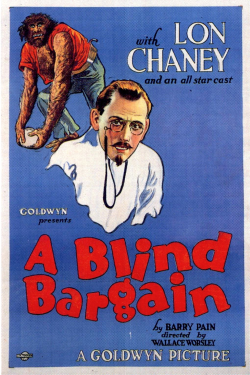
Poster of the original, lost—well, let’s just call it a “classic”. You can’t prove otherwise.
This is yet another in a strange line of competently made movies that pay attention to technical and aesthetic detail—things like cinematography, set design, lighting, sound design, music—that are enjoyable to watch. I have to believe that the makers of this film knew they were addressing a niche. What niche?
Well, the Boy and I liked it. It does a lot with a little budget. And it’s entertaining at every turn, even when it sort of falls apart in the third act.
The premise is a classic plot along the lines of Wasp Woman, where a mad scientist Dr. Gruder (Glover) is developing a youth serum. Heroin addict/Vietnam war vet Dominic (Jake Horowitz) is being terrorized by local dealer Vincent (Rob Mayes), and browbeaten by a social worker and his mother Joy Fontaine into getting on a methadone program.
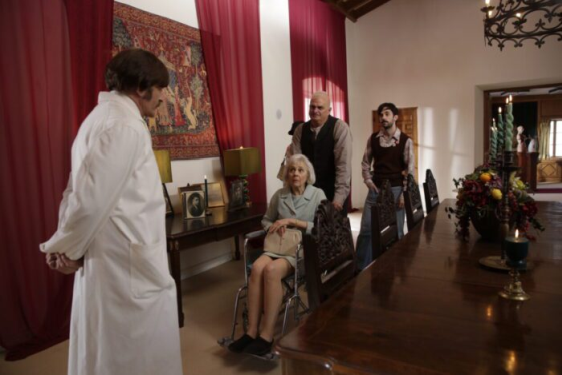
Our hero selling his mother to the mad scientist. The henchman pushing the chair is even named “Lobos”, er, I mean, “Logos”.
The program in question is run by Dr. Gruder, and it’s love at first sight when he gets his blood drawn by sexy nurse Ellie (Lucy Loken, and I’m sorry I’m not referencing any of their movies, because I don’t know who any of them are).
Love is reinforced by the fact that Dom has a rare RNA factor that Gruder needs for his youth serum. The one catch? You can only get it from women, so Dom sells mom off to the mad doctor and all his problems are solved!
The plot gets weirder as it goes on, and while it echoes the ’70s movie style of sleaze, with a sexy party and your mom getting incredibly hot and umotherly, it never reaches that era’s peak, for whch we can all be grateful.
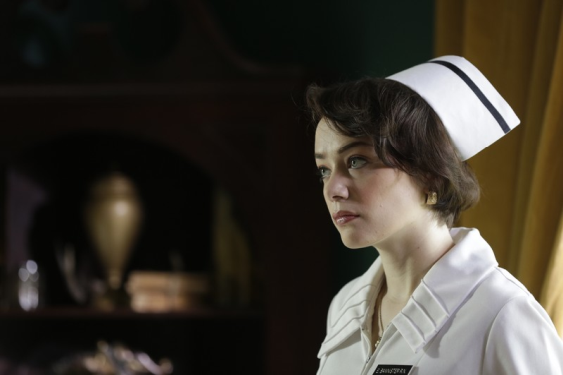
My one weakness: A sexy nurse.
Overall, a fun time. Glover seems remarkably restrained. The music is…odd. Sometimes it seems to be carrying a lot of emotional weight because the scene doesn’t intrinsically evoke that. This is not unusual in itself, but stood out for me as there seemed to be two different scores going on. One more traditional, one more like exactly what you’d hear in Messiah of Evil.
There’s much to enjoy and admire here. It feels like the story is trying to tease something profound but that never really happens—which is very much a ’70s thing. There’s a satanic connection that never plays out. There’s reference to the wrath of “Logos” which is confusing on many levels, but probably is just a reference to the endearingly lunk-headed, swimming-pool loving henchman.
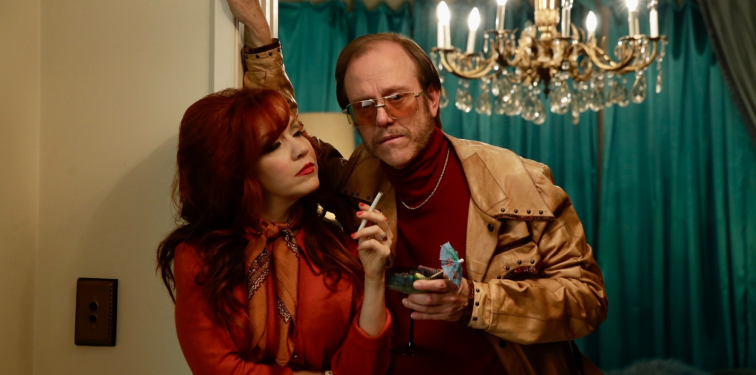
I mean…come on. This is more fun than a ’70s-themed drug-fueled orgy.
It’s never really clear what Dr. Gruder’s goal is. Except for his callous disregard for his patients, which actually only manifests in the opening scene, and his inability to take “no” for an answer, he seems like a well-meaning guy. That’s a funny way to phrase it, but like a lot of the elements of this film, the movie’s generally genial attitude makes it a lot more pleasant to watch than an actual counter-culture artifact.
It’s practically whimsical and I can endorse it on that basis.

A little “Caligari” throwback?