The French Connection (1971)

When watching five-time Oscar winner, The French Connection, which won for Best Picture, Best Director, Best Actor, Best Editing and Best Writing, one becomes convinced that 1971 must have been a pretty bad year for movies. This feeling plays into my prejudices about the whole 1966-1975 era, of course but, looking at the films that year with more than 4,000 votes on IMDB, I’m pretty convinced about my take and my taste.

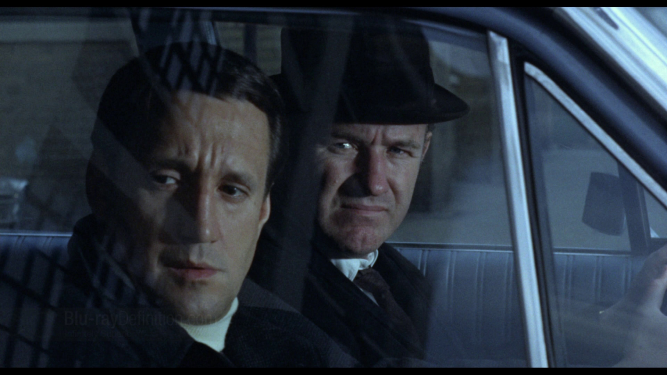
It’s not that The French Connection is bad. It boasts a breakout performance by Gene Hackman, no-nonsense editing by William Friedkin, a terrific second act car/el-train chase, and a rather bold, avant-garde score by Don Ellis—the latter of which may or may not be a plus for you personally. Still, one wonders if the film’s award success isn’t related to a paucity of other films to give awards to.

This movie’s got an acute case of the ’70s. I’m sure that’s what a lot of people (critics, especially) love about it. It’s aggressively pointless in its denouement, with the bad guys mostly going free or lightly punished, with the heaviest punishment going to the least guilty guy. The dogged detected ultimately kills someone nominally on his side in attempt to get the Big Bad, who gets away.

This is 1971 enough to make you have flashbacks to Woodstock. And it’s just as a dumb a conceit as “the good guy gets the bad guy in the end”. Consider:

The second act chase scene is bravura, as an obsessed Popeye commandeers a car and drives it like a maniac under the el-train, resulting in minimally three deaths (as the perp on the train shoots two people and causes a heart-attack to evade capture), untold property damage, and then shoots the perp in the back to keep him from getting away.

🎶Zoom zoom!🎶

This is a great scene, but it’s as nonsense as the “good guy wins” trope most people like in their police procedurals. First, it’s literally impossible. Like, in the league of Keanu Reeves managing to keep a bus above 50mph on Southern California freeways. Second, having what is hands down the best part of the movie at the end of Act 2, makes the film a snake-that-ate-an-elephant, narratively. (Flat on both ends and bulging in the middle.)

I mean, that’s fine, although it feels anticlimactic (because it literally is). I just object to the elevation of this style for its “realism”. Of course, at the time it had the added benefit of being novel in a lot of ways—and that aspect of it is completely lost now. A zoomer girl in the lobby said “I hated that movie,” while conceding some aspects were quite good. The Boy rather astutely said he’d seen it copied so many times, it was hard to judge on its own merits. He wasn’t exactly blown away.

Now, technically, this is all great stuff, and it will make you mourn for lost filmmaking skill and technology. There’s a color palette to the film, particularly the police station, which has an odd old-school technicolor film quality. When we go to Popeye’s crappy cinder block apartment house, we also get an antiquated palette that contrasts sharply with the grittiness of the setting, as if Buddy (Roy Scheider) is going to burst in on William Powell and Myrna Loy swilling Schlitz in their underwear.

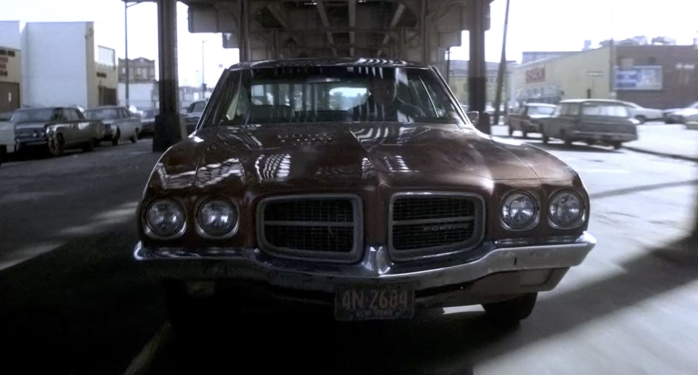
“We’re gonna need a bigger car.” “It’s 1971, Roy. There ARE no bigger cars than these, ever, in all of history.”

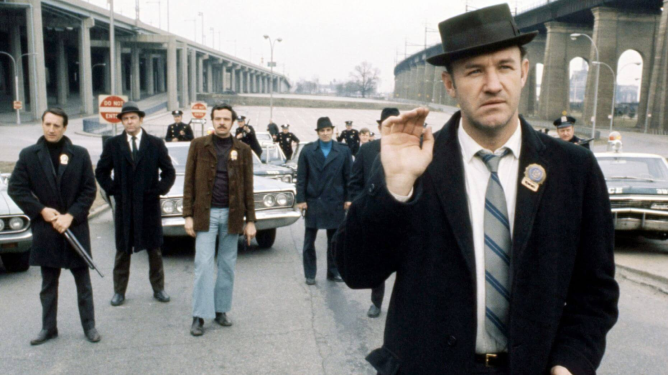
Popeye is supposed to be an anti-hero, but he barely registers as that. He uses that one word white people can’t use today, but 1971 ain’t 2026. He got a cop killed once, but we don’t know the context, and he just straight up shoots (accidentally) a guy he doesn’t much like, but this seems more due to sloppy police tactics. Popeye is too reckless to not rush into a building to catch his guy, but it doesn’t explain why two other cops follow him in and surprise him.

There are a lot of things we accept in police procedurals, like all stories, because we want the story and we’re not overly interested in reality. And I think the main thing I bristle at here is that this is all done in service of the ugly reality of 1971.

Box office is murky. Some sources have “Billy Jack” as the number one film of the year, but I think those ideas are based on rolling it’s unreasonably successful 1973 re-release into its original 1971 opening. Other big BO films in 1971 were Fiddler on the Roof and Diamonds Are Forever—Sean Connery’s return as James Bond. It was a big year for Clint Eastwood, who directed his first film Play Misty For Me and starred in the mis-marketed Southern Gothic classic The Beguiled.

But Eastwood’s real breakthrough that year was none other than Dirty Harry. Both “loose cannon” films, Harry eschews the bleak realism of a police force completely unable to stem the tide of immorality the cultural revolution brought for a possibly more realistic idea that it’s not so much that the police are overwhelmed as they are hidebound by politics.

Popeye’s supposed to be an anti-hero. Harry’s supposed to be an actual villain. Neither idea comes across, really, because Hackman and Eastwood are incredibly likable. Harry never shoots or so much as endangers an innocent civilian. On the other hand, he literally tortures Andrew Robinson’s maniac killer, and this puts us as the audience in a much more uncomfortable place than Popeye’s relatable workplace goofs. (Heh.)

The critics preferred French Connection to Dirty Harry, and the 1971 woke mob protested Harry at the Oscars, for which it was not nominated.

Currently, both are sitting at 7.7 on IMDB, but in 1971, Connection beat Harry at the box office. I’ll probably re-watch Harry before I re-watch this, tho’.

🎶Bye bye bye byyyyye 🎶

BLAKE TRIVIA: We saw the French answer to this, The Connection, and I pointed out then that a whole dramatic arc with the police chief’s wife leaving him wouldn’t be seen in the American version. And I’m just giving myself credit for having known this without ever having seen it.

The Lady From Shanghai (1947)

Orson Welles wasn’t very good at making movies. I mean, sure, his cinematography is breathtaking, his sense of pacing thrilling, his ability to turn any plot into an entertaining story unparalleled. And, sure, he got great performances—often the greatest performances of actor’s careers.

But, look, for his first film, he took a swing at the guy whose newspapers were going to have to advertise his show. To say nothing of reviewing it. For his second film, he crafted a broody, dark epic during wartime.

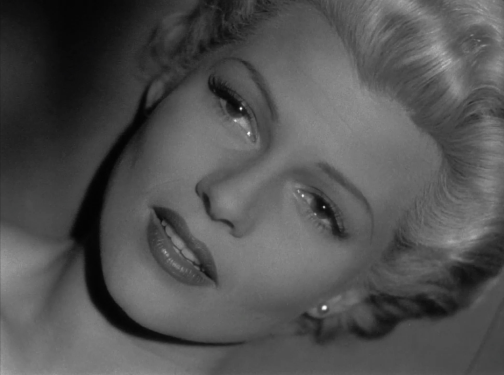
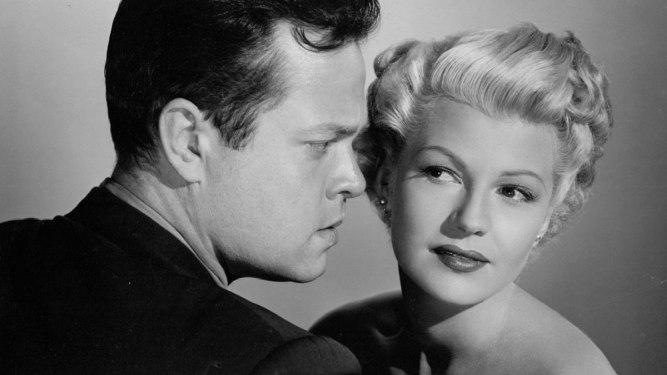
And for his third film, Lady from Shanghai, he encouraged “The Love Goddess” Rita Hayworth to cut her iconic hair. Hot off of Gilda. Harry Cohn (head of Columbia, who had given Welles this chance after the disastrous Ambersons) was pissed, and understandably so.

Hideous! Who could love such a woman?

Well, this wasn’t his third film, exactly. With Welles, it’s always complicated. (And his fans have kind of polluted his IMDB page with unfinished projects, so it’s not really a great resource.) He did a film just prior to this called The Stranger for International Pictures. The head of IP gave the editor free-rein to cut all of the Welles-y stuff out and of course the artiste hated it—but it’s allegedly the only movie he made that made money. (They probably all have by this point, of course.)

So, once again, we have Welles doing his thing, and the studio cutting out forty minutes to an hour and recycling it. Take that future art historians!

The Lady from Shanghai is generally regarded as a noir, and it has many of the hallmarks of such. The plot is that Elsa (Hayworth), encounters spirited sailor Michael (Welles) who saves her from being gang-raped. The sparks fly and Elsa solicits Michael to join her for a sea voyage on her husband’s yacht.

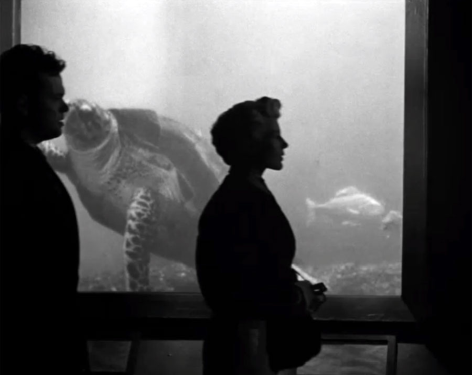
The turtle, who is just an extra here, would ultimately go onto star in “Finding Nemo”.

Her husband Arthur (Everett Sloan) is a major creep who demeans Elsa constantly, and there’s a strong implication that he’s blackmailed her into marrying him. Adding to the creep factor is Grisby, Arthur’s “friend” (played by stage and vaudeville actor Glenn Anders, doing a Nelson Rockefeller impression). Arthur and Grisby are lawyers and they have a successful law firm, dedicated to getting really, really guilty people off,

Michael of course falls for Elsa but realizes she can’t really marry an itinerant sailor. Grisby offers Michael $5,000 if he’ll commit one little murder—that of Grisby himself. And we are off to the races, as nothing is what it seems, and nothing really matters much because everything looks so cool and spooky and even though their marriage was coming to an end, Hayworth and Welles spark in every scene.

It’s a very noir plot and Welles’ visuals were always in that dramatic deeply lit style, but it doesn’t really feel like a noir. Noir evolved from melodrama, and this movie is practically the opposite. While the images are dramatic, the acting is really pretty low-key. If anything, people are under-reacting to things.

It’s also very funny in parts. And positively lunatic in others, as when Elsa and Michael meet in an aquarium and walk past the tanks, which are rear projections of ridiculously large moray eels making moray eel faces.

And of course the classic end in the funhouse, with mirrors and what-not being shot up.

Mirrors and some camera tricks.

The cuts are sometimes jangly as a consequence of things being rather brutally excised, like a lot of that funhouse scene. A few of the musical cues are complete misses. The studio wanted a hit song so they had Rita Hayworth sing “Please Don’t Kiss Me”—and then had Anita Ellis dub it. Ellis also dubbed Hayworth for “Put The Blame On Mame,” but Hayworth had a decade-plus long track record of singing on film.

Hollywood is weird.

According to our host, Stanley Sheff, who worked on Welles’ last completed project “The Orson Welles Show,” it was Welles himself who painted the final set—the carnival outside the funhouse. Like everything else with his hand in it, it’s distinctive and memorable, and you’re sort of surprised one person could do it. (I think there are competing stories involving a painter’s strike, but I’ll take a secondhand account from an unreliable narrator over the Internet any day.)

I could see it again. There’s always so much to see in Orson Welles’ films, and you kind of have to wonder, if he could’ve worked within the system better, would we have more finished projects? And if he had finished those projects, would they be the caliber of even the unfinished/mangled works he left behind?


Hollywood made some good-looking couples back in the day. And some classic heartbreaks.

Sorcerer (1977)

On the website-formerly-known-as-Twitter the other day, engagement bait was centered around the question “What director had the best three-movie streak?” Among the obvious answers (Lean, Hitch, Nolan, Scorsese) were those who referenced William Friedkin’s three-fer: The French ConnectionThe Exorcist and Sorcerer.

Sorcerer has achieved cult status in this century after a troubled production and disastrous first run. There were more people in the audience for this than for 5-time Oscar winner The French Connection. (Though this may have had to do with a podcast tie-in.) I told The Boy that this movie was good evidence that the people who were successful in the ’70s had no idea why they were successful.

“I’m not saying adding a shark won’t sell more tickets, I just can’t figure out how we fit the damn thing in the cab.”

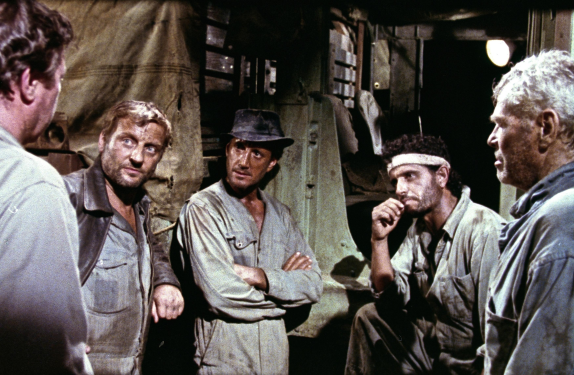
The French original is longer, and to my mind, more enjoyable but this is a solid film: Four men on the run from the law find themselves in a perpetually impoverished Latin American country where the only work is provided by a ruthless oil company (probably Gulf & Western, who owned Paramount at the time and whose chairman* is pictured on the wall while the executives are deciding who lives and who dies), when a well is sabotaged and one of them perpetual oil fires start.

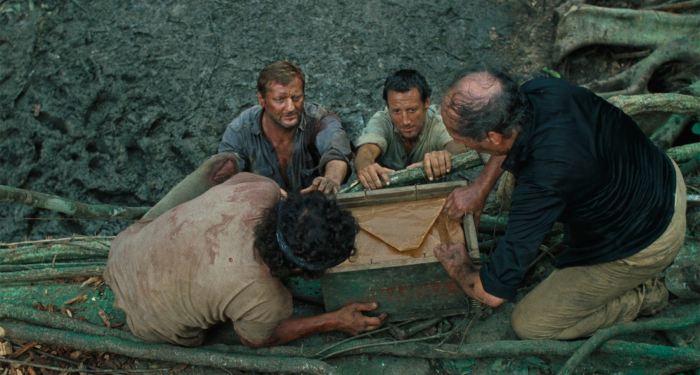
The only way to stop the fire is with dynamite but the dynamite has been neglected and now can’t be moved two feet without blowing up, much less the 250 miles to the fire. Unless it’s on trucks moving very slowly and smoothly. Our four desperados are the only ones capable of doing the job. Maybe.

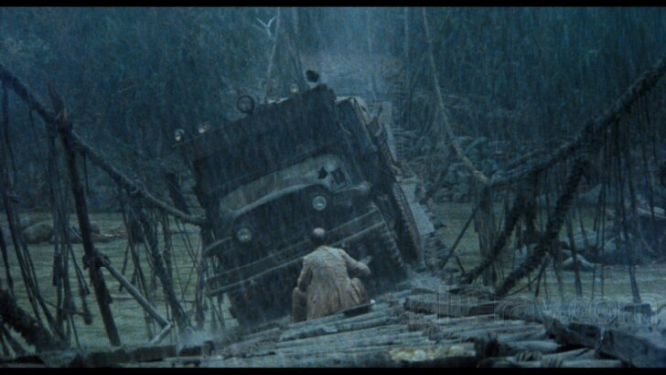
Only one box of dynamite is needed but two trucks are sent, each with three boxes. One of the trucks isn’t going to make it, probably. And after about an hour of setup, you get an hour of suspense as the two trucks creep across the godforsaken jungle encountering roadblocks, rickety bridges, storms, and so on.

It’s a good movie. The Boy liked it more than I but he felt it was a little choppy. The editing is abrupt in places.

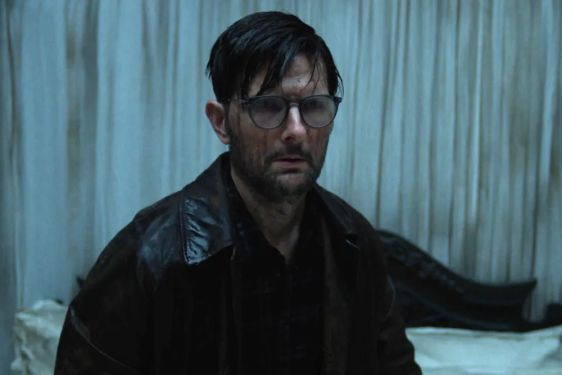
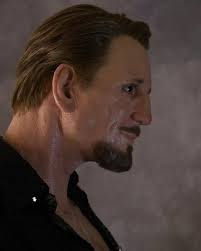
I never noticed it but Roy Scheider  in profile looks like the Jack on a playing card. (Maybe the King in All That Jazz.) His nose is the hypotenuse in an increasingly obtuse triangle.

I mean, seriously.

Another thing the Boy noticed is that, even though this movie gives you the four protagonists’ backstories, it feels like you know their character less than in the French version. I think that’s correct: The backstories are all action, which isn’t boring, but the only thing it tells you about the characters is that they’re trash.

The #1 rule of writing, they say, is “Show, don’t tell.” This is wrong, in my experience, and this movie shows exactly how such a thing can go wrong. In the French version, we know our men are bad guys or they wouldn’t be where they are. Here we see their crimes: An assassination, a terrorist attack (blowing up a building), a massive embezzlement combined with driving a man to suicide, and knocking over a church for its bingo money and killing a priest in the process.

There are actually five men able to do the drive, with the assassin on the outs. So the assassin kills the competition, forcing the other three to let him make the drive.

Go team?

Jack or no, Scheider called this 15 years later, saying the audience had no one to root for. This from a director whose last movie was literally Good vs. Evil. And having just seen The French Connection, Popeye Doyle isn’t much of an anti-hero. He’s meant to be, to be sure, but in the context of police procedural, his crimes are pretty minor, and Hackman’s in full charm-offensive mode.

By not showing us their backstories, the French film makes the redemption arcs much more palatable. Friedkin wanted to make the action stand for the characters, a great aesthetic idea, theoretically, but maybe a little hard to pull of in your movie about driving trucks full of explosives over rickety bridges.

“We’re gonna need a bigger truck. No, wait, smaller! SMALLER truck! Dammit, Roy!”

Good looking film, of course, with the caveat that it’s Friedkin’s trademark squalor. He wants to make sure you experience every awful aspect of this—every graffitied wall, every starving child, every burnt body, down to the making the love interest an old indio woman. (The original French film had the odd but not unlovely Vera Clouzot. Earlier, this film gives us the drop-dead gorgeous Anne-Marie Deschodt—but only for about five minutes before her husband runs off.)

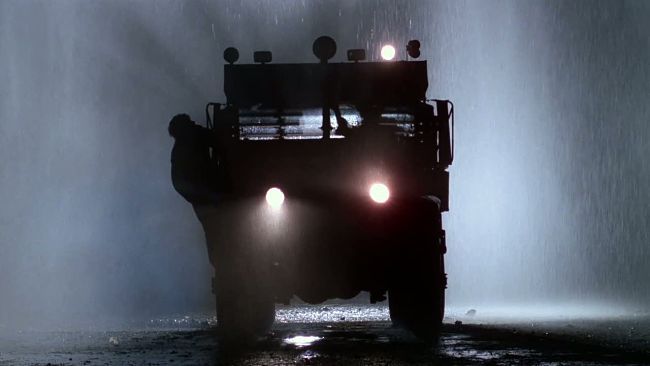
Tangerine Dream began their reign of terror with this film, which peters out around 1988 with house favorite Miracle Mile. Actually, where this is most pronounced is a pre-trip montage with all the guys working over the trucks in the night, ending with a backlit shot of the truck named Sorcerer. It’s so John Carpenter, I half-wondered if he’d somehow been commissioned to do that music.

It’s a good movie. But I’m not the least surprised it flopped. After the insane successes of his previous two films, Friedkin was out of control. And while the typical anti-hero movie could at least say “the lesser of two evils defeats the greater of two evils,” this is “some pretty bad evils in the service of what the filmmaker wants us to see as an even greater evil.”

And it was released on June 25th, 1977. What was number 1 at the box office on June 25, 1977?

“That’s no moon.”

A movie that gave us good versus evil without the slightest bit of ambiguity. A movie that actually had floated along at #2 at first, because it was struggling against The Greatest (Muhammed Ali as Muhammaed Ali in the Muhammed Ali story) and Smokey and the Bandit, but would claim the #1 crown that very weekend and hold on to it until December of that year, and then go on to capture it again all the way into the summer of the following year, and then just for good measure, capture the #1 spot a couple more times in the summer of 1979! (This was all a single release, too. The 1982 rerelease would bring in tens of millions more dollars, but it would not recapture the #1 slot again until 1997.)

That’s right. I’m talking about Hundreds of Beavers.

No, of course not. Don’t be silly. The movie is, of course, Star Wars. And what is often neglected (because filmmakers don’t want this to be true) is that stories of good versus evil are extremely popular. The same mindset that creates a Sorceror, when dominant, makes space for something like Star Wars to be ridiculously  popular all out of proportion to its actual quality.

The equivalent today is something like Project Hail Mary, where a couple of space-bros save the world and become good buddies—without any tedious lecturing about the communist topics du jour. Hollywood learned its lesson in the 1970s. I’m not sure it can today.

“Look, it’s an extra box. Nobody’s gonna miss it. How do you smoke dynamite, again?”

* “Fun” fact: I worked in the Bluhdorn building on the Paramount lot for a summer back in the day. Bluhdorn was the G&W President pictured.

Project Hail Mary

I’ve been goofing on this film since it came out. I mean, look, it rocketed up the IMDB top 250 ahead of JawsRaging BullThe Big Lebowski and FargoCitizen Kane and Rocky—this last film being relevant, as we’ll see later. The author is Andy Weir, who gave us the abysmal Artemis, which the directors of Project Hail Mary are doubtless feverishly developing as I write this. The Martian, in Ridley Scott’s hands, was pretty forgettable (at least to me). And the directors of this flick, Phil Lord and Chris Miller, I recalled from them being pulled off of Solo: A Star Wars Story.

Though I guess they’re enjoying a good smug “We Told You So” over that fiasco.

Lord and Miller actually have a pretty solid track record: Cloudy With A Chance Of MeatballsThe Lego Movie, and 21 Jump Street.

What I expected was a basically respectable but overlong flick with grating Marvel humor and an exhausting reliance on pre-existing cultural artifacts.

What I got was much better. The Boy was fairly enthused, and while I was less so, I would say I enjoyed it overall. So let’s count the ways this is good.

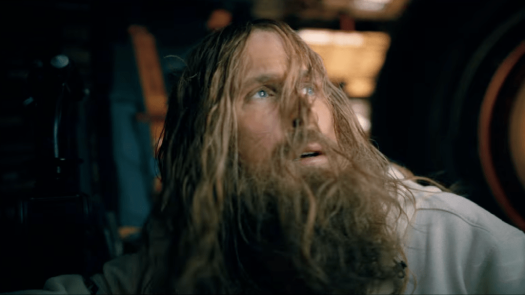
PHM relies heavily on Ryan Gosling’s charm. As Ryland Grace, middle school science teacher, he’s kind of a loser and a goofball, and we learn his previously more prestigious life came to an end when he promulgated the theory that life could emerge even in the absence of water. It’s this that gets the attention of Eva Stratt (Sandra Huller, Toni Erdmann, Anatomy of a Fall) who suggests that Grace can be of help to Project Hail Mary.

Who’s more charming than literally me?

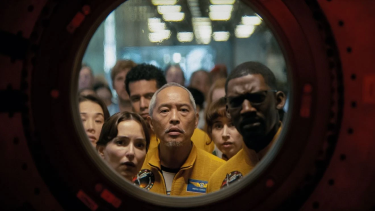
See, the Earth’s sun is being eaten by astrophages, and it turns out all the other suns in the immediate vicinity are also being eaten except Tau Ceti, a mere 11.9 light years away. So Huller helms the project to visit the system to figure out if there’s a cure for astrophages, essentially.

Grace, as mentioned, is a goofball. He barely wants to be involved. We spend most of the movie trying to figure out why anyone would send him. And I have to say, the third act reveal is truly great. It’s almost zany, but it treads very deftly between serious and comic. Gosling’s charm is critical here.

But the movie does tone-switching very well, which is not something Western movies do well. (Eastern films pull it off very regularly, which probably says something about something.)

In practice, what this means is that the expected Marvel-style humor doesn’t grate like I thought it would. The quips are fast and the movie doesn’t pause awkwardly for laughter—which is good, because not all the jokes land, of course—and they’re largely not brought out to defuse heavier moments. There’s also good physical comedy, good fish-out-of-water comedy, and so on.

Grace becomes sympathetic and stays sympathetic, which is critical. When he wins over his handler, Carl (Lionel Boyce), it feels earned. This allows the movie to show Carl coming up with the first breakthrough without it feeling like pandering, and Grace to show some, y’know, grace. Carl is one of many minor characters who feel fleshed out and more real than, well, most movies in most modern Hollywood films.

“Good luck. And we’re all counting on you.”

Ultimately, though, this is the Gosling show with special guest star: A rock puppet, puppeteered (in part) and voiced by James Ortiz. The two develop a relationship that feels real, and since Rocky can’t emote much directly, his words and actions have to convey his side of the story to us. (The Pixar lamp has it easy compared to Rocky.)

I thought the actual space scenes looked weird—in the sense that I felt like they could’ve made things more “realistic” looking—but I didn’t really mind it as the art and set direction had a particular aesthetic, and the CGI conformed to that. I much prefer “aesthetic” to “real”, as I’ve often said.

The cultural references are there, of course, but presented in a non-grating way. The movie is canny enough to provide excuses for the goofy montages that would otherwise be tension-deflating. Like, “we need to visit this planet 11 days away, let’s kill time with a montage!”

Also canny: Having a technically proficient alien able to do things Ryland wouldn’t have the faintest chance of being able to do.

“Hey, Rocky! Watch me pull a hit movie out of my hat!” “Again?”

There are good action scenes and suspense pretty much throughout.

Best big new release? Sure, there’s not much competition. In the top 100 films of all time, no, not even close.

First, it’s 2:36 minutes long. That’s about 20 minutes too long. And there are four endings. While I appreciated the way they turned out, the second one, where Grace rescues Rocky, comes dangerously close to nullifying the whole mission. I get why they did it—because the fourth and final ending is heartwarming—but I will curmudgeoningly say no. But if they had to keep all this stuff in, they could’ve trimmed some of the “majesty of space” shots.

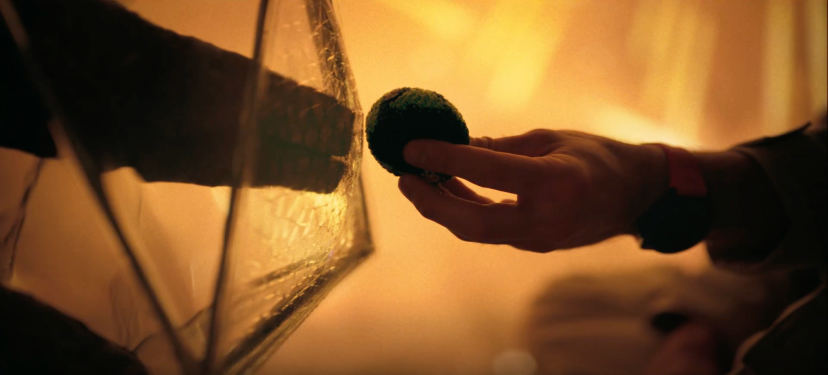
Second, the First Contact scene has Rocky throwing a large thermos-sized object across space for Grace to catch. Though there’s no chance you could see such an object, and why not just light it up? (There are potentially story reasons for that, but I don’t know why they would take precedence over “No way could a human see it.”)

But most of all, a big part of the plot is Grace turning astrophages into fuel, and the emotional hook is he can’t go home because he won’t have enough fuel. Even though the entire crux of the problem is that the astrophages are everywhere. By the quadrillions. Floating in big rivers through space. I wanted to ignore that one, but it serves as no fewer than two emotional hooks.

There were a few things like that, but they didn’t detract too much. It’s almost like classic Spielbergian. Manipulative, showy, and about as subtle as a jackhammer. But this is not bad. This is…movies.

"Be good, Gosling."