The Fisher King
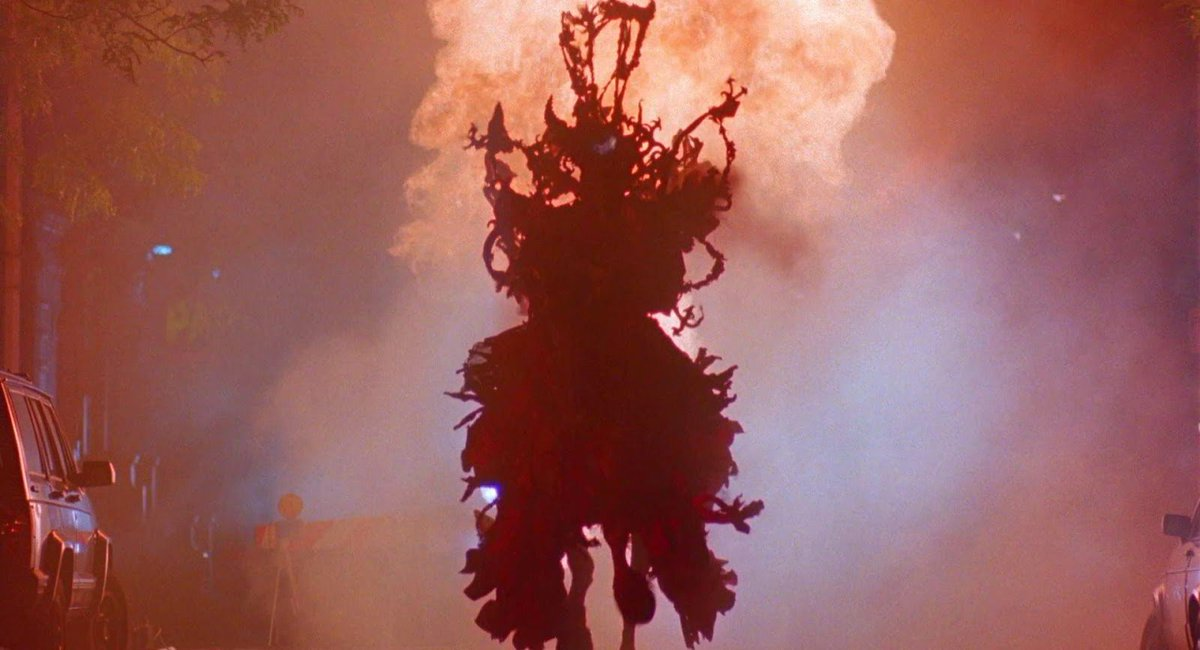
I like New York in June, how about you?
For my money, one of the best runs for a director in movie history is Terry Gilliam's 1981 to 1995 stretch: Time Bandits (1981), "The Crimson Permanent Assurance" short which opens The Meaning of Life, followed by Brazil, The Adventures of Baron Munchausen, The Fisher King and 12 Monkeys. Fear and Loathing in Las Vegas may also be good but I'm unlikely to see it.
Gilliam then famously tried to tackle Don Quixote and it seems to have broken him. Seriously, his next movie would end up being The Brothers Grimm, although maybe it was Tideland because he was having so much trouble dealing with the Weinsteins on Grimm, and then one sort of wonders if it was Don Quixote that broke him or just being a pain in the ass that did it. After all, it is said that the song from Time Bandits was about him.
Struggle you may with the elementary
Lucky you got so far
All you owe is apologies
None of this is meant to judge. As I say, this 15-20 year run is terrific, and hits a sweet spot where Gilliam's blends fantasy and reality in his unique ways, and manages to create a genuinely unique and pleasing style from of his grunge aesthetic. (Seriously, if you wanted to use a single word to describe the Gilliam aesthetic, "grungy" would do the job.)
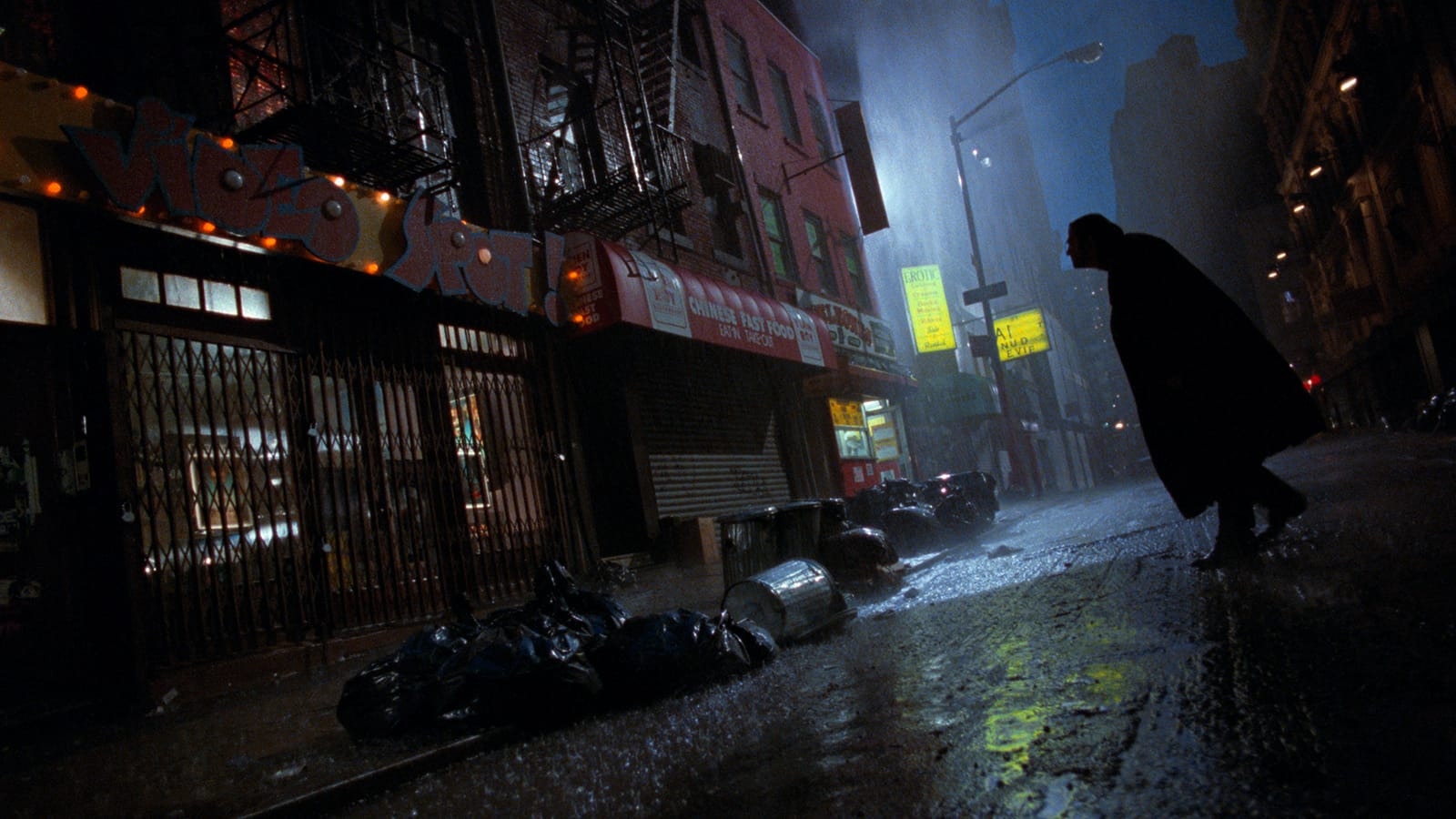
In The Fisher King, Jeff Bridges plays Jack Lucas, a successful right-wing New York shock jock—
Pause for a moment to enjoy the "villainous right-wing radio host" trope that was so fashionable in the 1990s. Various versions of "Law & Order" featured them. Oliver Stone did a whole movie in this vein. Even TekKill, the eighth book in the TekWar featured a Limbaugh clone. You can't say they didn't understand the threat.
—whose glib rantings result in a brutal mass murder. Jack hits the skids after this, taking some sort of responsibility for the murders. He ends up exploiting Anne (Mercedes Ruehl, who won an Oscar for this), a woman who owns a video store, moping around and being sort of anti-help, as when he recommends Ordinary Peepholes to a needy customer (Kathy Najimy) in search of something Cary Grant-y/Katharine Hepburn-y.
After a fight with Anne, he staggers out on to the street where he is saved by from violent homeless-hating youth by Parry (Robin Williams), king of the hobos. Or king of the mentally ill homeless. Or whatever.
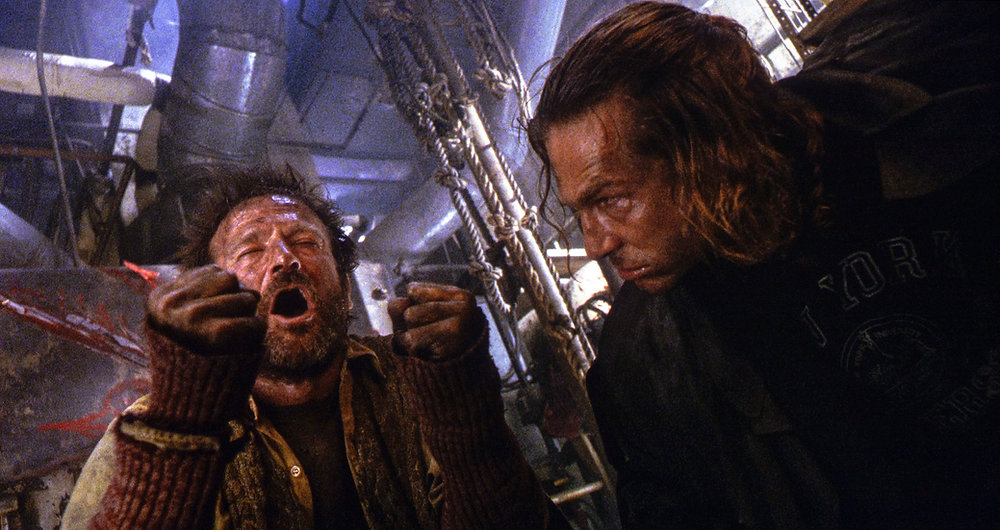
Look, this movie is a vibe. All movies are to one degree or another, but this one really is, and if you can't pick that vibe up, you're not going to like it.
The vibe is a Gilliam vibe, a blending of reality and surreality, the sort of technique where accountants can become pirates without leaving their offices, and the biggest liar in the room is telling the biggest truth.
Parry is a crazy man searching for the Holy Grail, which he's convinced resides in a man's study on the Upper East Side. The Grail is the "symbol of God's divine Grace" and Parry needs it to come back from the horrors he has suffered. Jack needs to help him to assuage his own conscience, but Jack is glib, and he'll do a great deal to avoid actually doing anything that will impact on himself seriously—even now, as a guy mooching off a lower middle-class lady.
Jack coerces Anne into hooking up Parry with his dream girl, Lydia (Amanda Plummer) and the movie veers into romcom territory. Anyway, it's easier than fetching the Grail. But of course sacrifice is part of the legend, too, and Jack is going to have to sacrifice something of who he thinks he is to complete the quest.
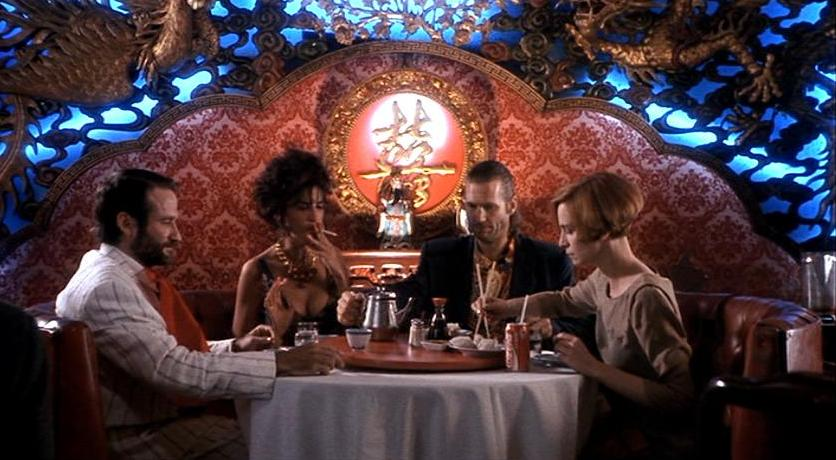
Tonally, this movie is amazing. It's drama, tragedy, comedy, slapstick, horror, swinging between these from moment to moment unselfconsciously. In the midst of this mad stew, the characters feel shockingly real: Michael Jeter as a cabaret singer, David Hyde Pierce as Lucas' cold-as-ice agent, John de Lancie as a TV executive, and so on.
Nominated for five Academy Awards, including best score.
Ruehl is pitch-perfect, and Anne's dynamic with Jack feels very true. Bridges is great, as always, though you might struggle (as I did, occasionally) to not hear "The Dude" in his performance. (Also, I noticed here that he has a tic/trick of loudly opening or closing his mouth. He did it in Starman and Lebowski where it seems very appropriate. Less so here.)
Williams is on a relatively short leash, and is less grating, but probably the weakest part of the film. And this isn't entirely his fault, it's more his character that's the problem. Much like Hollywood's handling of brain injury, homelessness isn't a topic it wants to be honest about. Even insane and gross, Parry is still a romanticization or perhaps a callback to the "happy hobo" trope of the early 20th century.
On the other hand, Gilliam's brilliant Munchausen had just flopped, and he was happy just be allowed to work again. The real reason he was allowed to work again? The studio wanted to lure Robin Williams into a project. It was solid hit at the box office, leading to Gilliam's biggest success: 12 Monkeys.
Comments
No comments yet.