Peter Asher: Everywhere Man
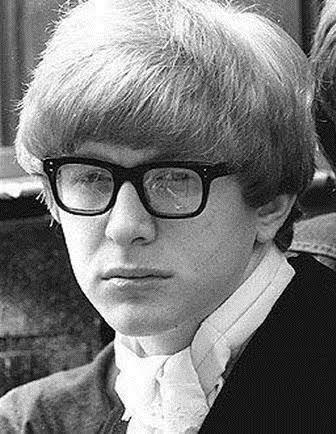
The main concern in watching a documentary about a Boomer music figure is that it's going to rely heavily on the nostalgia rather than constructing an interesting story.
We presumed this documentary Peter Asher: Everywhere Man would fall into the nostalgia trap, but we were desperate and the producer/director team did the wonderful Ballet Russe and one of my all-time favorites The Galapagos Affair: Satan Came To Eden.
Our instincts were correct, unfortunately.

The movie is based on Peter Asher's show, where he talks about his life, his years as part of the "British Invasion" duo "Peter and Gordon", and then his life as a manager and record producer, first handling James Taylor and Linda Rondstadt, and then producing albums for a litany of past-their-prime easy listening talents like Streisand, Cher, Diamond, Elton John, and so on.
And I'm not knocking these people or Asher. They're very talented at what they do as was he, but at an hour-and-a-half in, we get the "shopping list" syndrome that afflicts a lot of documentaries, especially musical ones.
The one nod to Gen-X would be 10,000 Maniacs, I guess.

Starting out, there was an element of humor because his sister, an actress, happened to be dating Paul McCartney. (They both had been child actors but he gave it up.) And so when he and his school chum Gordon Waller formed a modestly popular duo and got the chance to make a record, he asked Paul to give him that song that John didn't like.
The song began:
Please, lock me away.
To which John would follow up with:
Yes, okay. End of song.
So, The Beatles never recorded it and it became a worldwide #1 hit for Peter & Gordon. Peter & Gordon would go on to have many other hits, also written by Paul McCartney, some pseudonymously so that Macca could see if it was his name or the music that was resonating.
Not my favorite Beatle, not usually my kind of music, even, but you have to be obstinate to not recognize the pop musical genius. It wasn't just P&G, either. McCartney's cast-offs powered half-a-dozen musical groups of the era. But that's a sidebar.
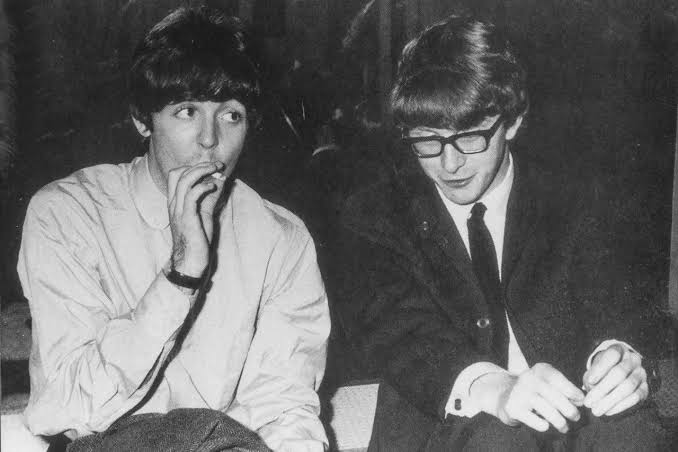
Asher is appropriately humble. He knew that they weren't great musicians, they were so-so songwriters, and their main strength was the close harmony they had developed. When some bird Gordon was dating blew in his ear about how he didn't need Asher, this would begin a three or four decade journey to fail to achieve the same closeness with anyone else.
Asher had another goal all along: He wanted to be a record producer, and to tell great musicians what to do. Sincerity, work ethic, a desire to develop rather than exploit—these repeated character attributes won the day.
But before he goes on to being a producer, he opens a pair of sister stores called "Indica", one sells art, the other books.
The art store was where Yoko Ono's installation first caught John Lennon's eye.
He says at one of his shows somebody stood up and pointed at him yelling "You're the one responsible!"
Then comes the story of John Dunbar and Marianna Faithfull, their whirlwind marriage and—I guess Asher was the one to take her to the party where she met the Rolling Stones.
None of this, of course, meant anything to The Boy.

Unlike last year's Shari Lewis and Lamb Chop, by contrast, as the movie wears on—and it's nearly two hours!—it depends more and more on the audience knowing and caring about Asher wending his way through the celebrity mobs of the '80s and '90s.
Oh, look! It's Steve Martin! It's Robin Williams! (Yes, a spoken word album.)
The thing about pop culture is that it's ephemeral. There are exceptions, of course, but these could almost be regarded as accidents. (I just called out Young Washington, for example, because they used Bach in the ballroom scenes. But Bach was a local organist—local to Germany, I mean—and his time was over. Until it wasn't, of course.)
So I kind of ended up thinking that this movie, though it wasn't for us, was correctly targeted at its 70+ audience—because this stuff is largely forgotten by everyone else. And personally, while I found some of the people involved likable—Asher and his family; James Taylor's family (but not James himself); Carole King comes off as a gem, protesting she couldn't go on tour because she had children to take care of—the rampant hedonism of the era was gross, and the survivors mostly look awful (or died or went insane) after ravaging their bodies with drugs.

Sorry to be a bummer, man, but they bought into drugs, promoted them, and continued to normalize them even as they saw their relationships (personal, artistic and business) destroyed by them.
Hell, I didn't even know I was going to get to the end of this review and walk away leaving this as the big takeaway, but here we are. Anyway, on the three-point scale:
- Subject matter is...honestly, it's an almost historical curiosity. Asher is like a real-life musical Forest Gump, though not dumb, but if you're not into the era or the music, it's hard to care too much about things that were intensely important to a dozen people sixty years ago.
- Presentation is fine. Lots of still living people to interview. Most of them relevant. I couldn't quite figure out what Pattie Boyd had to offer. I felt like she was there because she's still alive and was part of the circle.
- Slant: Well, sure, it's a movie about Peter Asher and how great he is, which is fine. As noted, the worse slant is sort of brushing by the drug casualties. Betsy Asher ended up in an asylum. Gordon Waller died at 64 looking 100.
I wouldn't have wanted it to be a temperance movie, but this culture was supremely confident in its own righteousness. They were doing everything different! They were casting out the old ways! The wreckage is impressive, and sometimes I feel like the whole genertaion is going to go to its grave saying "We were right all along!"
Anyway, fans of the era, go, enjoy. Others can give it a miss.
Comments
No comments yet.