F for Fake (1973)
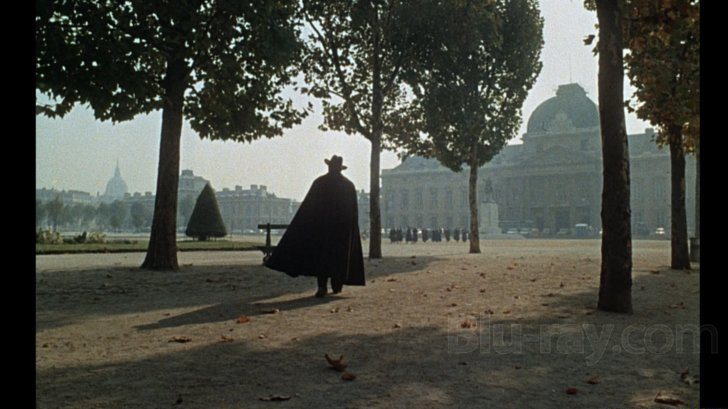
If we rely on experts because they know more than we do, how do we know they're experts?
Orson Welles asks us this tantalizing and startlingly contemporary question at the beginning of "F for Fake". In context, however, he is talking about the world of art, which I think we all realize now is basically just a form of money laundering and source of psyops.
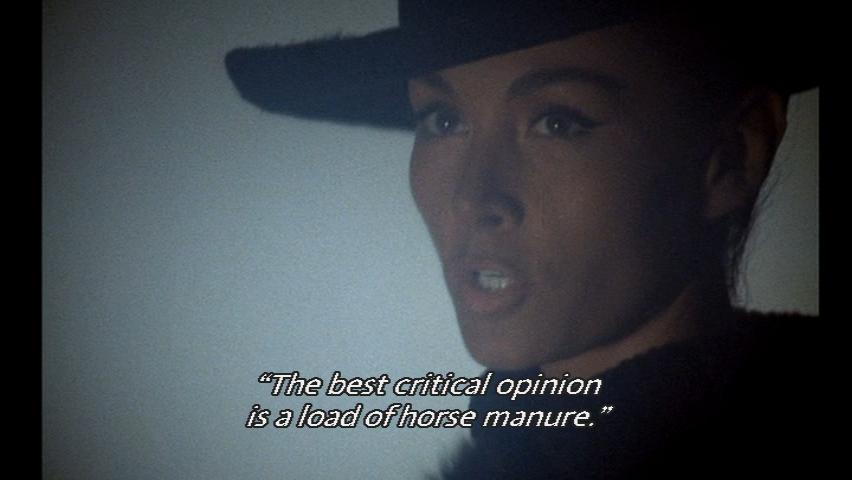
This is labeled as a documentary because there isn't really a filmed category for "essays". So we'll pretend this is a documentary and discuss what it's putatively about.
An early 20th century artist named Elmyr de Hory found that he could not get traction as a painter. To hear him tell it, the critics were squashing him and saying he wasn't a real artist or something of that sort. And so he demonstrated his prowess by imitating all their darlings.
He imitated them so well, the story goes, that his artworks hang in many major museums under names like "Matisse," "Picasso," "Modigliani" and so on.
Clifford Irving, an American novelist, befriended de Hory when visiting Ibiza, and the artist asked the novelist to write his biography. This biography generated a lot of heat at the time, including some police attention.
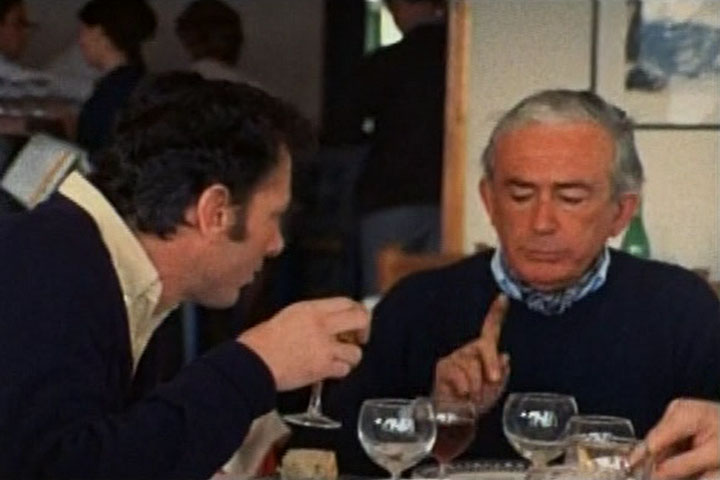
Irving went on to write Howard Hughes' autobiography. Hughes had been a recluse for over a decade, but Irving claimed to have gotten in touch with him, and gotten authorization for his life story. As it turns out, he hadn't gotten in touch with Hughes at all, he just figured no one would know, since Hughes was a recluse. And the checks sent to Hughes' wife turned out to be deposited by Irving's wife in Switzerland, who opened an account under the name of "Helga R. Hughes".
Irving would spend time in jail for his fraud, but would then go on to profit mightily from a book he wrote about the hoax.
You can easily see why this would amuse Welles, who tells this story as snippets as he travels around Ibiza, eating at restaurants, joining in de Hory's parties, and occasionally doing dramatic readings. This wonderful Kipling poem, for example, pops up twice:
When the flush of a newborn sun fell first on Eden's green and gold,
Our father Adam sat under the Tree and scratched with a stick in the mold;
And the first rude sketch that the world had seen was joy to his mighty heart,
Till the Devil whispered behind the leaves: "It's pretty, but is it Art?"
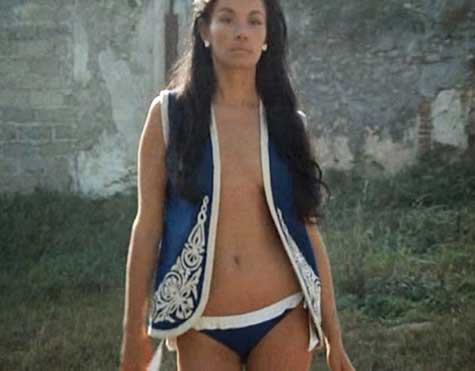
One of the many wonderful aspects of this film is how Welles is front-and-center for most of it, yet he never makes it about himself. He presents himself as a knowledgeable and trustworthy guide to the historical happenings. A beautiful woman is showcased at the front of the film, and appears (almost furtively) throughout, and in the end she becomes central to the story.
This is one of those movies that is best to go in more-or-less blind, so I'll end the description here. We'll pretend this is a documentary and use the three-point scale:
- Subject matter: It's important, but which aspects of it are important is debatable. Art is critical to society's health; art critics are another matter.
- Presentation: Terrific. Welles is engaging, he illustrates his points in a variety of unusual ways. He starts the movie doing close magic. At other points, he's centered in the camera, but clearly reading cue-cards that are at different angles. Maybe that's not deliberate, you could argue, but he also does the classic two-shot style interview, where the camera switches between the interviewer and interviewee, and they're completely unmatched. He's showing you that he's editing this, which all lends to the "fake" of things.
- Slant: Definitely toward fakery. Welles' enjoys the mischievous aspects of storytelling and, he tells us, the experts are faking as much as anyone, so maybe don't trust what you see.
Our host, Stanley Sheff, is building up to showing Welles' final, completed project ("The Orson Welles Show"). We disagree on the impact of Welles' broadcast of "The War of the Worlds" with me taking the stance that the broadcast really didn't panic America, that that was mostly hype (and an attempt by newspapers to present radio as unreliable) and that Welles played up the hype both for career advancement (it got him the contract that led to Citizen Kane) and because it amused him.
That aside Sheff is a real expert and lived (maybe lives?) in the shadow of the Golden Age of Hollywood. He has a Sirius show under the name of his alter ego Maxwell DeMille and you can check out some of his reels on his official site.
Comments
No comments yet.