The Most Pro-America Movies Of The 21st Century

On this 250th Independence Day, I thought it would be fun to revisit three films that came out in the 21st century that reflected the most positively on this great and glorious nation. There's a thread running through all this, which is probably really obvious. If you're not drunk, it'll probably leap out like a firework with a surprisingly short fuse.

The World's Fastest Indian
Released widely in the spring of 2006, this Roger Donaldson (Species, Dante's Peak) biopic tells the story of Burt Munro, a kiwi who (on hearing he has serious heart disease and little time left) mortgages his house and grabs a ship (he cooks and cleans to earn his passage) to Long Beach, California with an idea of getting to the Bonneville Salt Flats in Utah to race his Indian (a motorcycle made in Springfield, Massachusetts) and break the world land speed record.
After a rough start in Los Angeles, he's helped out by Tina, a friendly transvestite (Chris Williams, brother of Vanessa, "Dwight" from Dodgeball), buys a junker from Fernando (Paul Rodriguez), who accepts repayment in the form of quick tune-ups, is saved from a breakdown by Jake (a Native American played by Saginaw Grant of the Ridiculous 6), has a one-night stand with Ada (Diane Ladd) and finally makes it to the Flats where he is immediately disqualified before he can enter for not registering on time and for having a motorcycle that's essentially hand-made on the cheap with no safety devices.
The obscure Kiwi is saved through the bold actions of a wired-in white guy who browbeats the officials into letting Burt race where he breaks the speed of sound, then the speed of light, and crashes into the 8th Dimensions to fight Lectroids with Buckaroo Banzai.
OK, maybe not that last part.
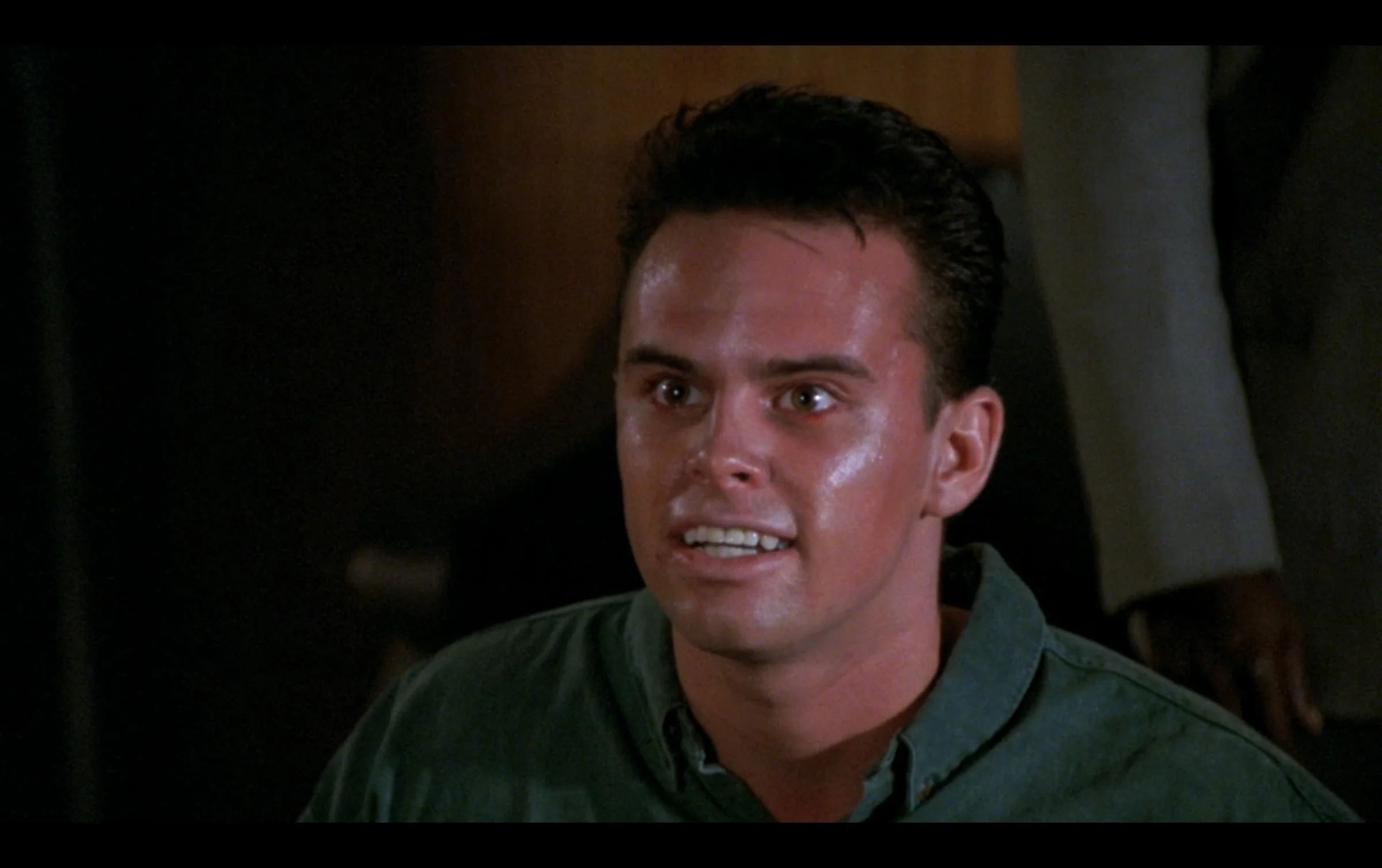
Actually, maybe not any of it: In real life Munro knew exactly what he was doing, had no time for charming side-quests, wasn't in poor health particularly, and was legendary at the Flats.
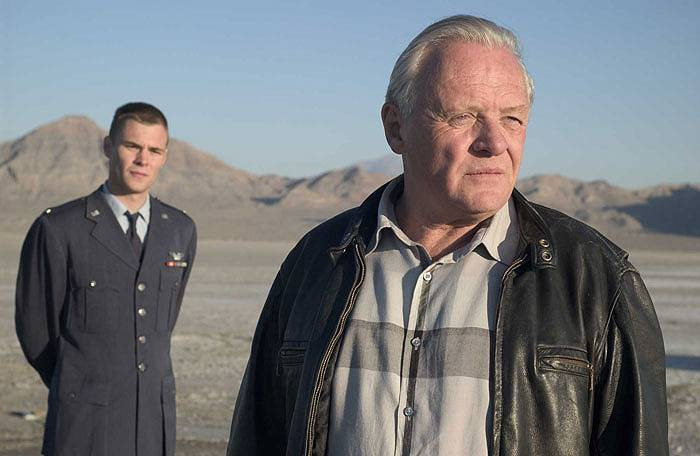
Great movie, though. Hopkins performance was true enough to make the Munro family cry. Composer J. Peter Robinson ("Charmed", Wayne's World) channels Thomas Newman and other turn-of-the-century movie composers effectively. The cinematography is gorgeous and the color-coding is spot on. Mornings in New Zealand are pastoral blue, the roads in America are amber-waves-of-grain, and the salt flats are white hot.
Some of this doesn't play the same in 2026. The aggressively diverse encounters Burt has stick out now in a way they didn't twenty years ago. Even though the intention here is to showcase Burt's general laid back attitude, in today's world it can feel overengineered.
Still, fine film. Wherever Burt goes, there's an American who wants to help.
Schultze Gets The Blues
An old German salt-miner retires and finds himself with nothing to do but play polkas and cough ominously. One day, while avoiding a report on lung cancer on the radio, he stumbles across zydeco music which, in true Teutonic fashion, he shrugs off. But then, shocka: He turns back to it, listens to it for a while, picks up his accordion and plays it by ear.
This becomes a kind of obsession—and you know I love movies about obsessed guys, right?—and he decides to try to raise the money to go to the swamps of America where the music is made. This involves a lot of low paying jobs to cover the ever-increasing fare.
His playing gets negative reactions from most of the townsfolk, but a core group really enjoys it, and because Schultze's a likable guy, they manage to get Schultze to represent them at the traditional German music festival in their sister city in Texas.
So it's an hour into the movie before we get to America, but it looms as a presence throughout. Schultze's quarrelsome friends (one Prussian, the other Saxon) talk about "the Yanks" dismissively, but they envy Schultze and his escape to the New World. They presume he's getting rich and famous and probably lucky and he'll forget all about them. The Americans are nice, they concede.
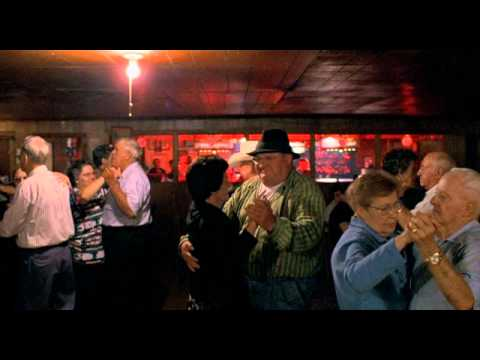
Schultze, after the traditional music conference, gets himself a rundown houseboat to sail into the swamps to find the home of zydeco. All along the way he encounters people who are eager to help him out, offering guidance, resources, dancing, food, all around a loose theme of "You like music? I like music! We should hang out!" And this when Schultze can barely say "music".
I can (and someday might) do an extensive post on how this film was shot. Each sequence is: The camera is set down, often at a medium-long distance, and the action plays out in front of it. It never moves. Even when attached to a vehicle, it stays fixed staring back at the passengers. At 48 minutes, it swivels about 90 degrees—from Schultze and his friends to the mysterious and sexy Lisa, a waitress who performs an impromptu Flamenco dance to dramatize unplugging the newfangled electronic slot machine.
It's got none of the slick camera movement of Indian and there's no color correction or enhancement. When Lisa does her Flamenco dance, she is wearing a drab tan skirt and dark brown sweater. There are elements of Tati here, and a Wes-Anderson-without-the-twee sense of humor that makes me laugh to beat the band. And it makes me want to take a crummy houseboat into the swamps of Louisiana.
Detective Chinatown 2
At the opposite end from these earlier films is Detective Chinatown 2. I did a full review when I saw it the first time, but it's interesting to revisit it now after the coof swallowed Detective Chinatown 3 and its sequel Detective Chinatown 1900 didn't get an American release either. (There is a spin-off television series of the original movie called "Detective Chinatown". There's also a spin-off series of this movie called, naturally, "Detective Chinatown 2". They do not feature the actors from the movies, nor do they feature the main detective from the movies, but a different actor plays the comic sidekick, who I guess is the real catalyst for the stories. They are not comedies, and I don't understand Asian television.)
While World's Fastest Indian is a big-budget, carefully constructed Hollywood fantasy, and Schultze Gets The Blues is practically cinema verité when it gets to America (the director just dropped actor Horst Krause into situations with whoever was there, and Krause didn't speak much English), DC2 is just trying like crazy to make you laugh and feel good.
It reminds me of Mel Brooks or Benny Hill. There are mobs chasing the heroes through the streets of New York, tough motorcycle gangs with a romantic streak, sassy Chinese bureaucrats, cartoonishly broad racial stereotypes, and an undercover scene where our three heroes dress in nurse drag.

New York City in DC2 is like Paris in Amelie: There's no sign of graffiti, dog droppings, vagrants—even the crime is stylish and in good fun. When the boys go to a school to check out the number one suspects, all of a sudden the walls are completely plastered with the most aesthetic graffiti imaginable. (Set deisgn!)
Even though there's a shockingly grim set of crimes underneath it all, it's done with the kind of tone-switching the Asians do (on the whole) way better than the West. The final chase scene is reminiscent of Ferris Beuller's Day Off, as the three heroes on the lam rush to stop a grisly murder, riding in a horse-drawn carriage and leading their pursuers in an impromptu parade, while Taylor Swift's "Welcome To New York" plays.
It's so utterly un-PC, it's one of the best times I've had in a theater in ten years.

American Exceptionalism
The common thread between all three movies, if you haven't picked it up, is that all three are based around the perspectives of foreigners of this great land of ours. If we look at @FreddieLa7's adventures, among many similar cases, we find that not only are these foreigners' views accurate, they're understated if anything.
While awful things happen every day, we are overly focused on them. The fact is, a country like this doesn't just happen: It exists because every day, ordinary people go out of their way to help others. Part of this is our tremendous affluence. But American hospitality goes back to Plymouth Rock. It is perhaps our greatest inheritance.
Sometimes it takes an outsider to remind us of that.
Comments
No comments yet.