Review
Coroner to the Stars
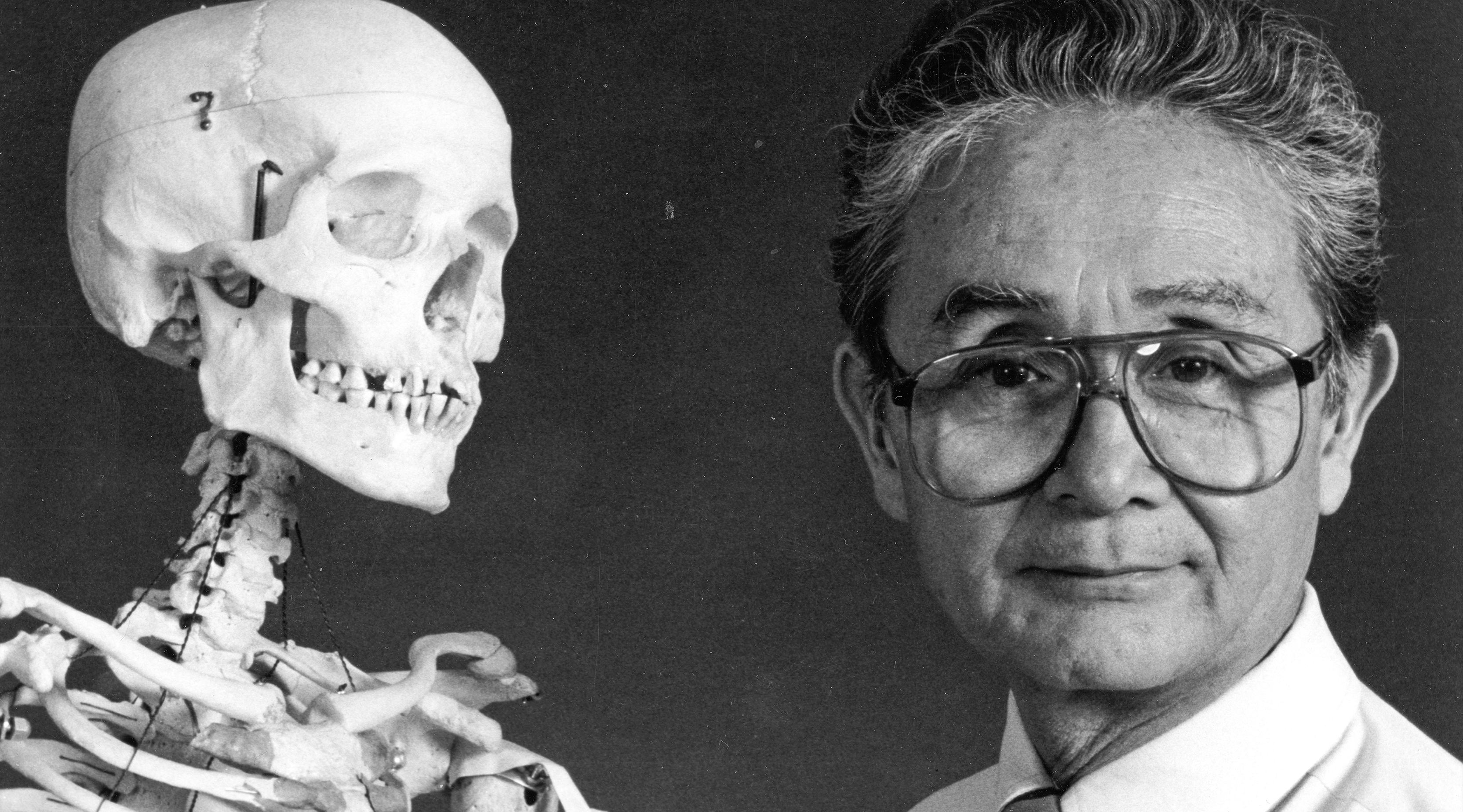
Quick, name a famous coroner! No, not Quincey. A real coroner!
Unless you said "Michael Baden," you probably said something along the lines of "Noguchi" as in Thomas Noguchi, coroner to the stars. Rising to near fame with the autopsy of Marilyn Monroe, he became the Chief Medical Examiner — Coroner. Los Angeles County required the coroner to be a doctor, which wasn't true in other places. (Recently, they've dropped the "Coroner", so I don't know what that is supposed to mean.)
Anyway, this is a documentary about Noguchi, who seems like an interesting and honest fellow, and the only coroner I know to have a song written about him, which they play during the film.
You made a mistake when you messed with me
You see, I got connections with the powers that be
Thomas Noguchi is gonna come on real strong
When they do that autopsy on you and find out that nothing was wrong
—Loudon Wainwright III, "Revenge"
Note, they didn't play the Wainwright song, but one by somebody named "Phranc".
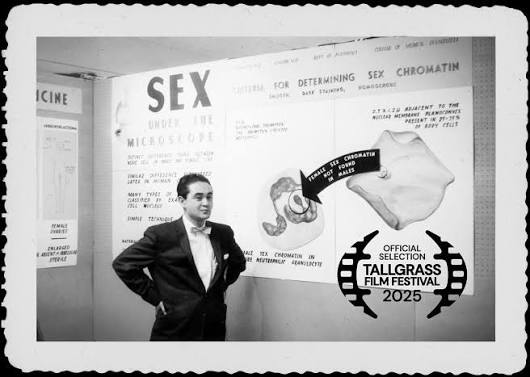
The key point being: Noguchi has at least two songs that mention him by name. And why not? After rising to power, he did many famous autopsies. Fore example, Robert Kennedy. Now, I always had a specific idea of how the RFK assassination went down, fueled by conspiracy theories about his bodyguard and so I was intrigued to see what they would say—
Holy crow! It wasn't a conspiracy theory at all, Noguchi straight-up said the shots that killed RFK came from behind him, at close range, and Sirhan Sirhan fired his shots from the front.
Reviewing this with other people, they weren't aware of the "shot from behind" thing. This would be because it never came up in the trial. The movie glosses over this as "friendly fire".
This reveals the fundamental weakness of this movie: It has a mission, and rather than spend time with Noguchi and his cases, which are the interesting part, we get...ugh...George Takei talking about how "the community" rallied to save Noguchi's job when he went around his boss to the L. A. County Board of Supervisors to get more money for the department.
The RFK segment was the most interesting, and the most detailed, and it could've stood more time. The big thing with the Monroe was forensic psychology, which sounds like a bunch of hoobity-joobity—that could've used a lot more scrutiny. The Tate-LaBianca murders have Noguchi claiming he said it looked like a pseudo-religious cult for three months before the cops, who were working a drug angle, found Manson.
The movie presents what Noguchi says as facts, but it doesn't draw a strong line between what the coroner can know from the evidence and what Noguchi said, particularly when prompted at, e.g., a press conference. We all knew "Quincy, M.E." was inspired by Noguchi, but the movie then implies that Klugman's performance influenced how Noguchi acted. Maybe it did, maybe it didn't; Noguchi was such a low-key guy, it's hard to see it.
And we had to pause for Takei to tell us the show got it backward by having Robert Ito be the assistant rather than the coroner. Then we had to pause again for Takei to tell us that Jack Klugman was a proven powerhouse in movies, theater and television, and of course it would've been economic suicide to have an Asian play the part—and I would argue, more significantly, a relatively obscure no-name actor. (Not to cast shade on Ito, a beloved character actor.)
We had a lot of talk with Janice Hahn and a brief mention of the obscene power held by the five members of the L.A. County Board of Supervisors. They're presented as good guys here, but even if we accept Hahn's references to her father being supportive of Noguchi, it's awful hard to ignore the fact that she inherited the job from him.
This is not a minor, oh, by-the-way, kind of detail. It tells us everything we're going to get is strained through a filter of respectability. We're gonna celebrate diversity and talk about Noguchi being the first to hire blacks and gays and maybe even women!
It manages to wear out its welcome in its short 80-minute running time. The Boy and I were displeased, though somewhat loathe to admit this film breaks our streak.
On the three-point Moviegique Documentary Scale ™️:
- Significance: I think it is a significant topic. Noguchi raised awareness of the whole process of autopsying, both in terms of what he did, his dedication to transparency and detail, and inspiring a TV show which, while preposterous and preachy, at least created some notion of the process and how it should go and what might be learned.
- Presentation: Perfectly adequate. Some obvious fakery (brief AI animations of static photos) and insertion of not-really-relevant photos (a documentary staple: mention the '20s and show people in raccoon coats dancing the Charleston, even if you're making a doc about Lenin's death). But the interviews with Noguchi were good and there was at least some relevant genuine material.
- Slant: Terrible. I mean, it's pro-Noguchi, I think, and I don't think that's necessarily wrong or bad. There are these little tags where they show him being concerned about where the camera is, but I didn't find that to be especially compelling. But it's just so "blue pilled," the whole thing ends up feeling very suspicious and also shallow.
I'll give you an example I think is relevant on that last point: They brought Noguchi up on charges of "departmental chaos" and "not knowing what is going on", basically both times they brought him up. So they fired him the second time. Is there any case that came up in the next decade or so that might reflect on how firing him improved the department?
We'd never know from this documentary. But a little double-murder starring O.J. Simpson raised some attention and Noguchi performed expert services for the defense (as did Michael Baden, amusingly enough). What was the number one impression about the Coroner's Office that got Noguchi fired? That it was utter chaos and incompetence.
Dr. Sathyavagiswaran—yes, that is his real name—was running the Coroner's Office at the time, and he is featured in this documentary talking about what a swell guy Noguchi is, but the documentary never addresses Simpson at all. Was Noguchi striking back? Did he just want the cash? Was he just being honest, watching his department fall apart after years?
The movie just ignores it all. Shrugs. "The system works!"
We didn't hate it, but we were really unsatisfied with how badly the material was handled.
Comments
No comments yet.