Network (1978)
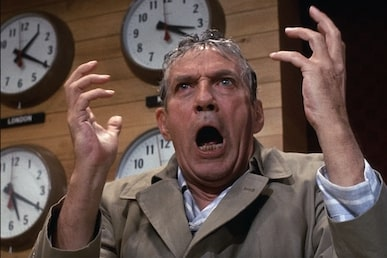
I have a fondness for Paddy Chayefsky. It began when I saw Network and was reinforced by every subsequent thing I saw from him, with the exception of Altered States, which I feel confident was Ken Russell smothering a brilliant script.
I mention this because he's not for everybody. I feel like his writing has gotten more and more relevant over the years. The Hospital, for example, can be enjoyed as if it had been made last month, with only the color palette and antiquated hospital machinery to betray it.
OK, maybe that's an exaggeration. Diana Rigg is too sexy and too weird to be featured in a modern film.
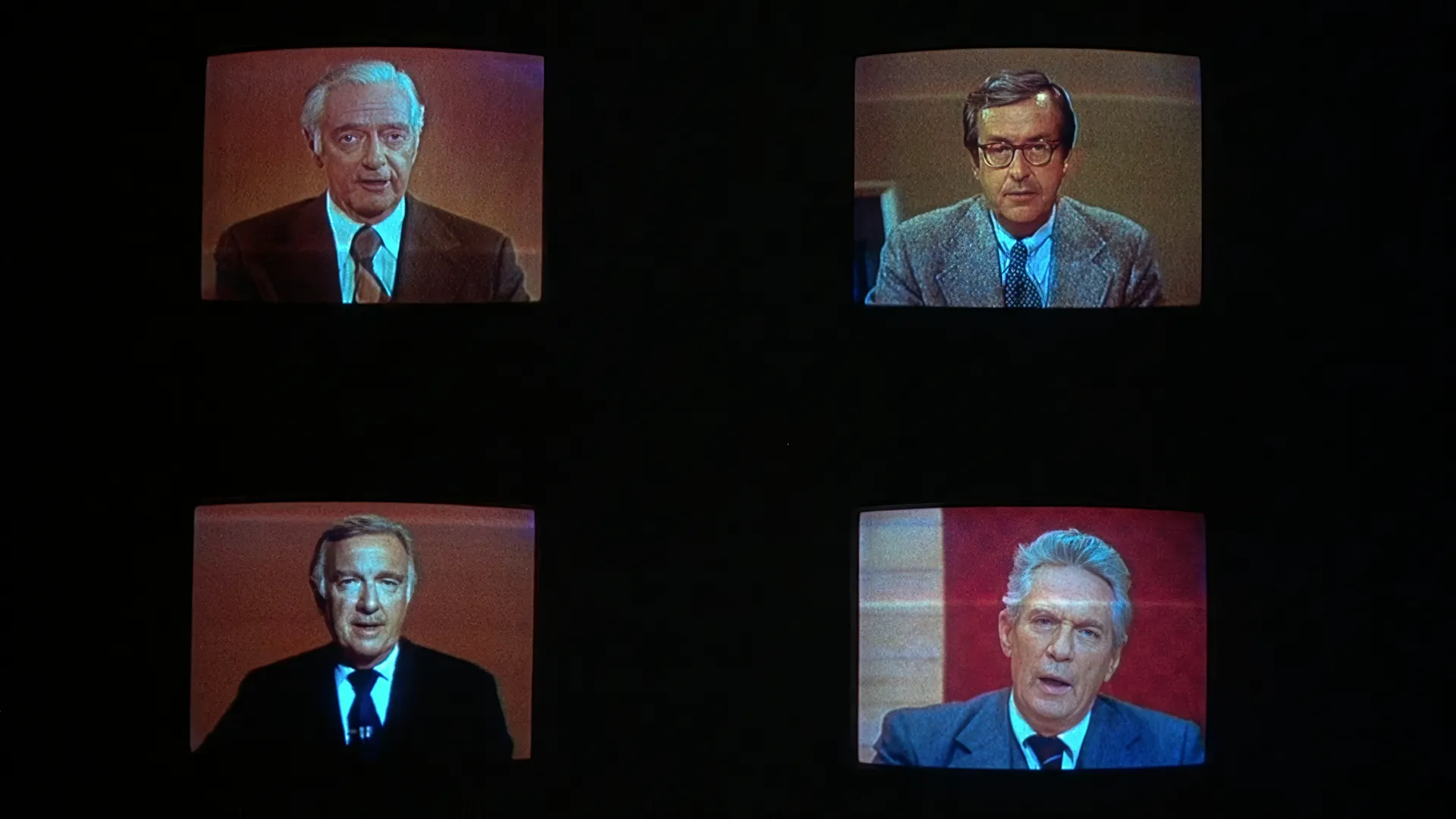
I feel the same way about Network—it's extremely relevant. While the Boy didn't agree, he did enjoy this film which got 10 Academy Award nominations and won four—three for acting. One Oscar went to Chayefsky. The other three went to Peter Finch ("I'm mad as hell and I'm not going to take it any more!"), Faye Dunaway (Bonnie and Clyde, Chinatown), and Beatrice Straight who plays William Holden's long-suffering wife in a rare plum role for her (she's most famous as the paranormal doctor in Poltergeist).
William Holden lost to Finch. Ned Beatty has an amazing, brief, role as the visionary who talks like someone who would go to WEF today. He got a well-deserved nomination which he lost to Jason Robards in All The President's Men. He was also up against Burgess Meredith and Burt Young for Rocky and Laurence Olivier for Marathon Man.
It was a big year for acting. Losers that year included Jodie Foster, Robert De Niro, Stallone and many more.
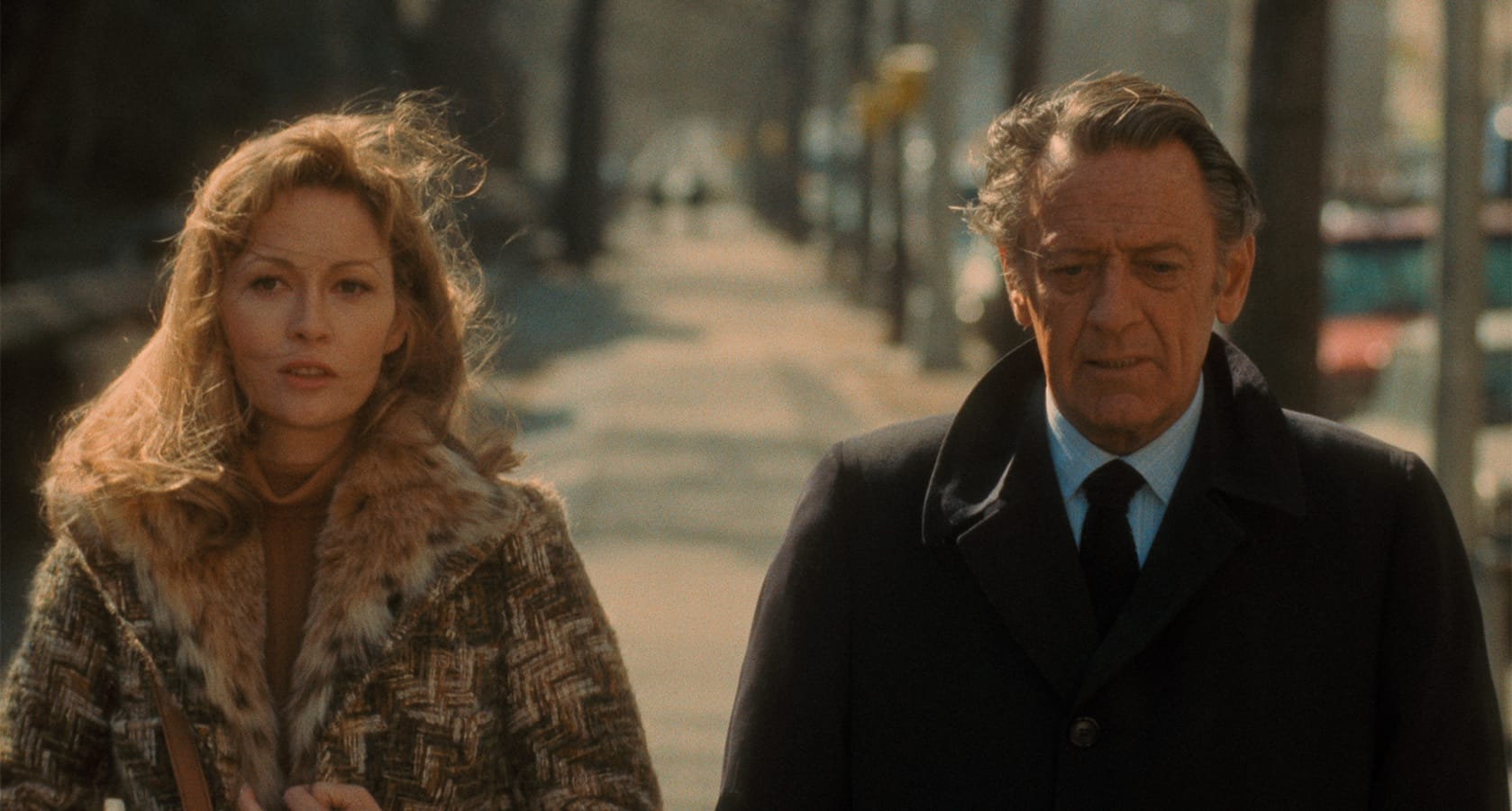
The story goes like this: Howard Beale (Finch) is being phased out of his newsreader job on the mythical UBS (heh) network and announces he's going to blow his brains out on live TV. Diana Christiansen (Dunaway) is the aggressive girl boss (really!) who is trying to get the news division under the entertainment umbrella so the network can stop losing money showing it. She sees Beale's madness as an opportunity and turns him into a modern day prophet.
He is crazy—but he's not always wrong. And in a very modern turn, he's identified the source of the problem: What today is known as "globohomo". And—also in a very modern turn—he attracts scads of viewers. He also becomes increasingly religious-in-presentation. That is, he looks like the most crazed of televangelists.
The underlying problem here is that UBS is owned by someone who is actually, actively working toward all the things that Howard Beale is decrying. That someone is Ned Beatty, and he—cynically or sincerely, who can tell?—presents himself as a prophet or messianic figure to Beale who changes to suit his new message.
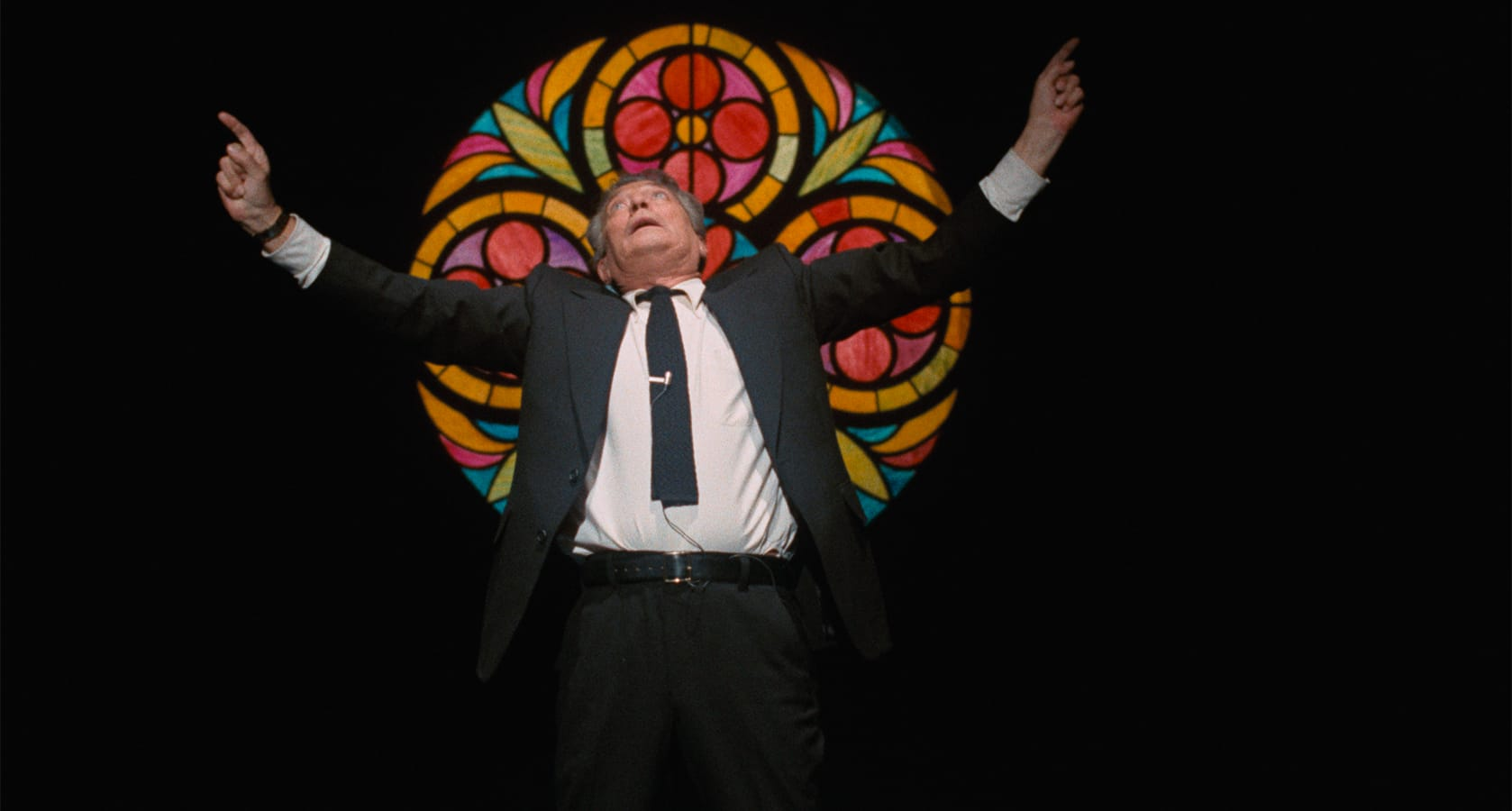
This leads to the next problem: By changing his message, Beale becomes drastically less popular. This movie has one of my favorite endings in all of movie history as Diana figures out a unique solution to the problem.
This is black comedy. How black? None more black.
Diana and the senior/boss she ultimately goes around, Max Schumacher (Holden), are having an affair throughout most of this. Diana is an amoral slut and Schumacher knows this, falls for her anyway knowing she'll break his heart and wreck his life and career.
And, if you're not catching the subtlety, Diana is television. Her only concern is ratings. She'll wreck Schumacher, she'll drag the network into whatever mud gets ratings—most notably, the leftwing terrorists that are committing crimes and video-recording them—and never once suffers a moment of regret or conscience.
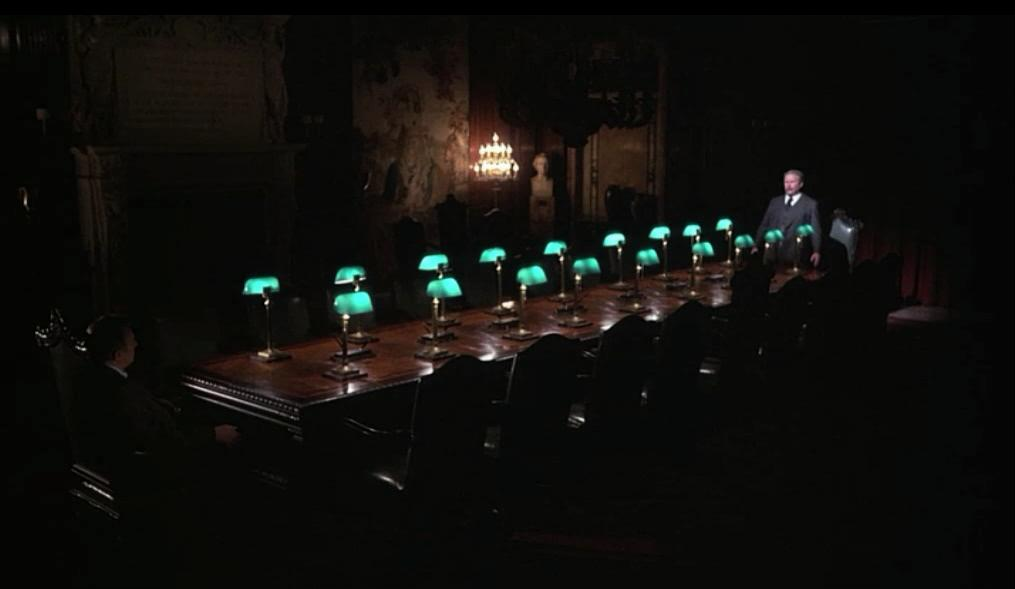
A great thread running through the proceedings is the negotiations between the radical black communists and the network execs over ancillary rights and residuals. Chayefsky saw through these guys.
Robert Duvall!
Sorry. Just realized I didn't even mention him. It's not a big role. If you know '70s TV at all, you're going to recognize a lot of actors who worked through the turn of the century and beyond: Conchata Farrell, Lane Smith, Michael Tucker, Lance Henriksen, Wesley Addy—names you may not recognize but which will probably make you go, "Oh! It's that guy!"
At two hours and one minute, it's a bit on the long side, but as The Boy said, "Sure, it's a little long but what are you going to cut? It's all gold!"
It is extremely well-written. Exquisitely plotted with rants that feel both accurate and organic. (The Hospital has rants, too, but they feel slightly forced at times.)
Beautifully shot, of course. Director Sidney Lumet would lose his Oscar to John G. Avildsen for Rocky. Owen Roizman would lose the cinematography to Bound For Glory—which seems unlikely but I haven't seen it. I'd say it's an important film but nobody actually learned a thing.
Comments
No comments yet.