Review
Jinsei
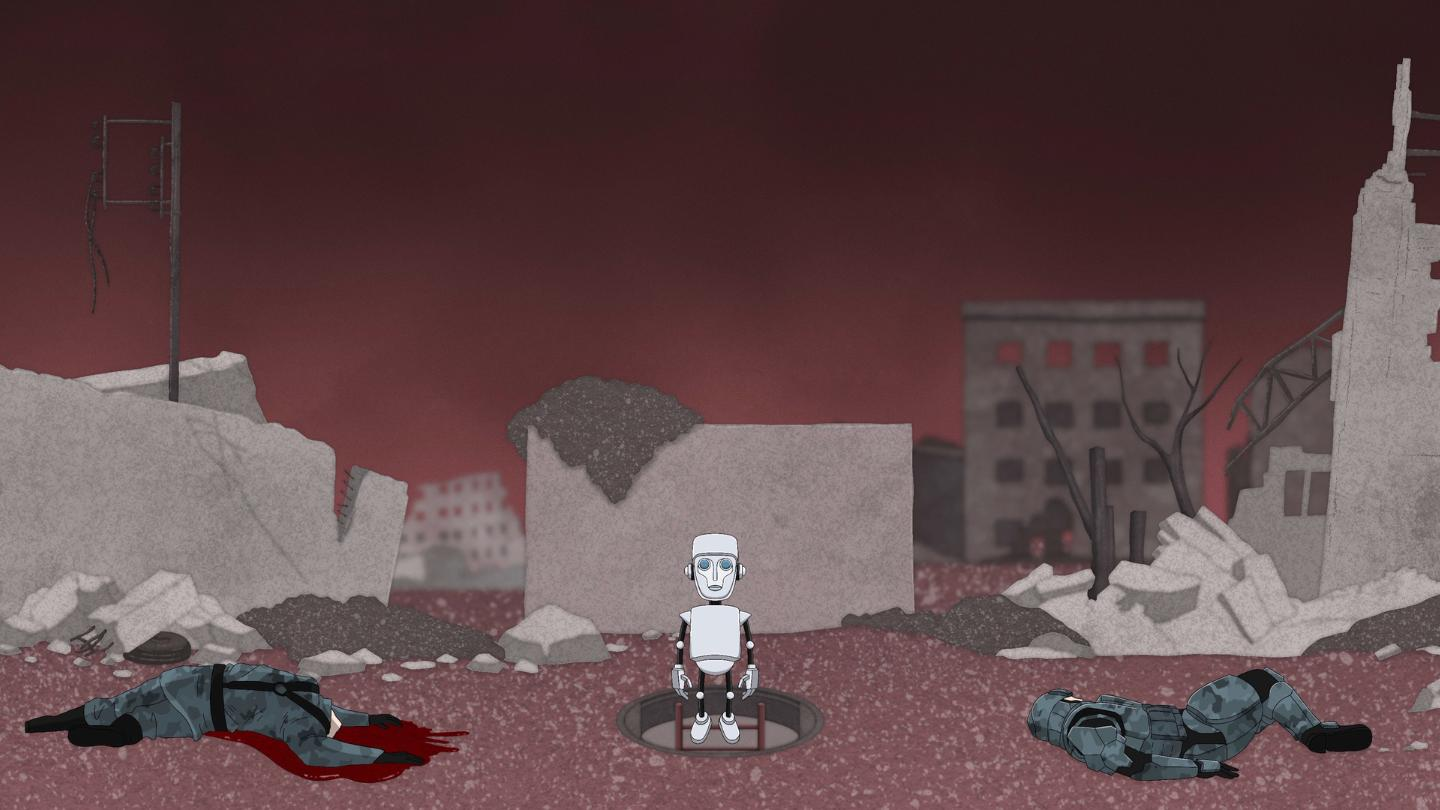
If I told you that a movie made just over $30K at the box office, you'd think that was pretty bad, right?
What if I mentioned that the budget for the movie was $10K?
In another unusual film this year, we have the animated feature, Jinsei, made by Ryuya Suzuki—and we can use the term "made" here, as he wrote, directed, edited, composed music for, and hand-animated—which somehow got released in over 150 theaters in America.
It's no Obsession. It won't be breaking $300M. It's not even a Backrooms. I can't give it a general recommend, but the Boy and I were both happy that it got made and we got to see it.
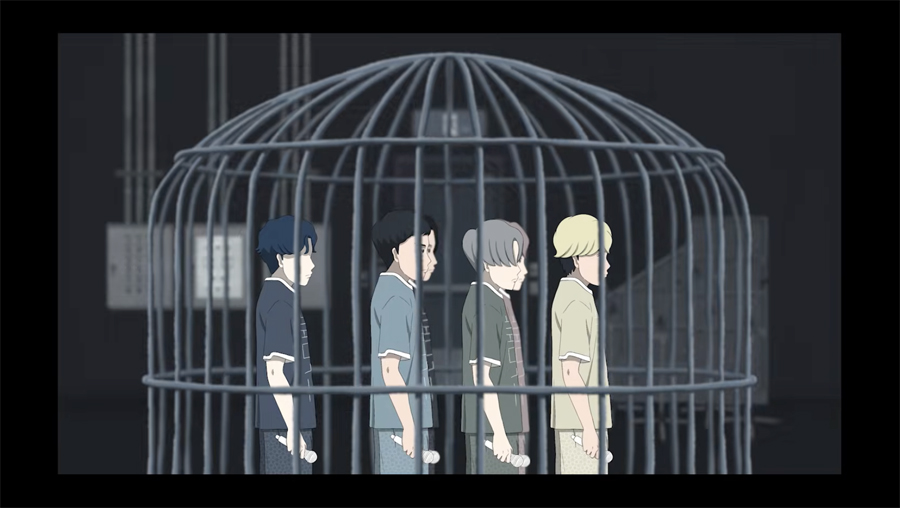
"Jinsei" is the name of the main character, and also the Japanese word for "life." An early childhood trauma, the death of his other, leaves him mostly mute and occasionally violent. We see him go through life, outcast, self-exiling, suddenly popular, then moving through an apocalyptic and post-apocalyptic Japan.
Some people comment on this last act as if it were tonally jarring, but the movie's never really anchored in reality. There's a parallel with the rock opera "Tommy," with a trauma leading to (what we would call today) an autistic sort of personality that—well, in this case Jinsei finds success but not really a "cure". So while this isn't a musical, it is a kind of fable or fairy tale.
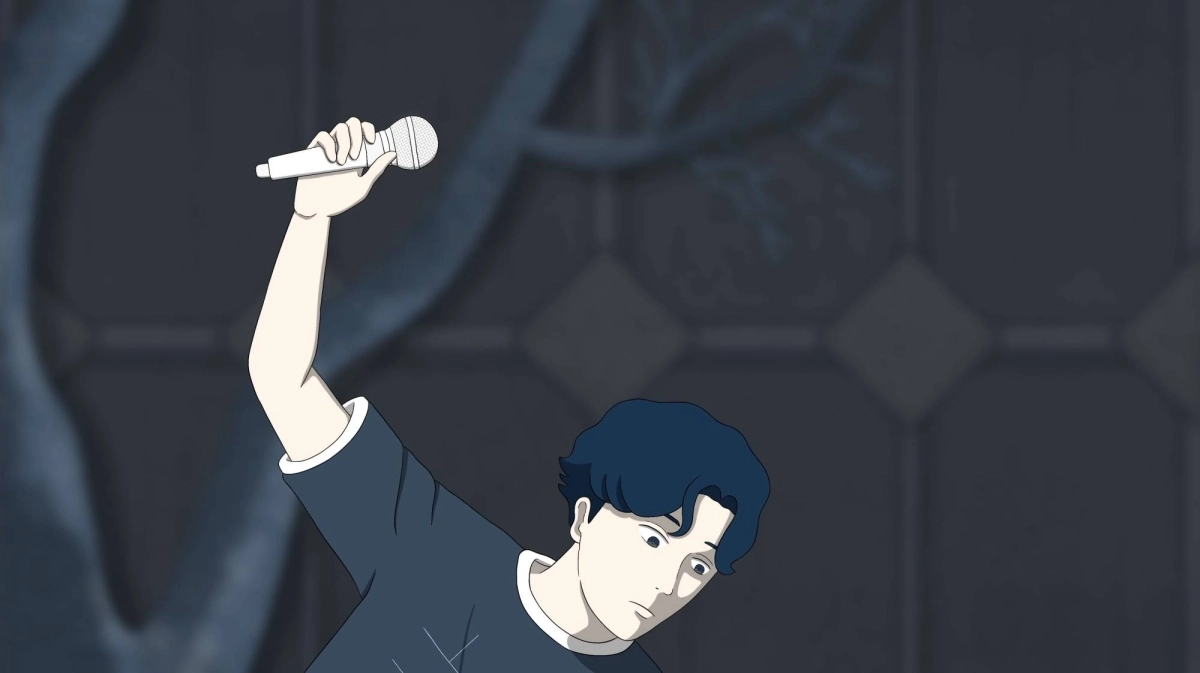
The animation is minimal but basically effective. The movie opens with a montage and I had some trouble following it, which led to some "aha" moments later on. You have to work at this film, but if you're willing to, it is at least not boring.
It is rather odd. Not Violence Voyager odd: The narrative here, while increasingly weird, is conventional and cohesive. The timeline, which is a hundred years, all flows forward.
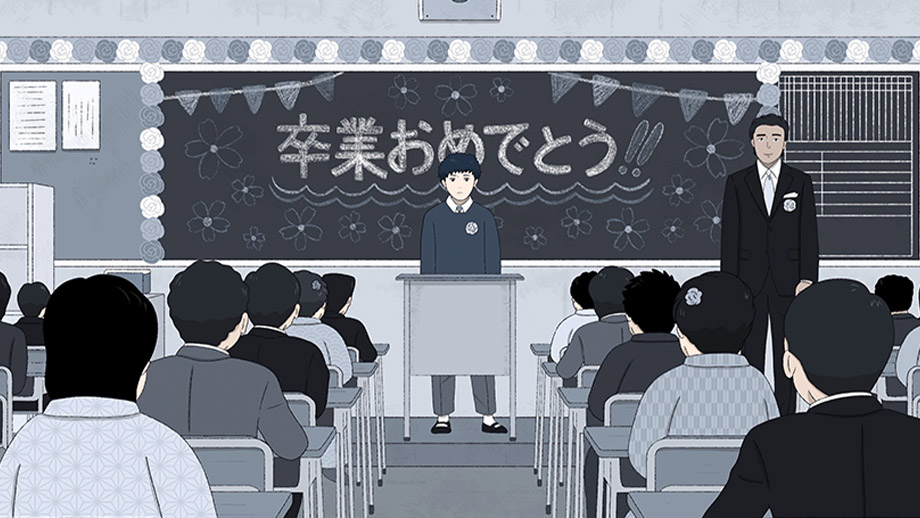
And while you could say its ambition exceeded its budget, Suzuki uses this low-budget nature in its favor. The theme of the film is really identity. Who are we? Are we what people call us? Are we what we do? By the end of the film—this is something the sci-fi ending permits—we see the character cycle through all the different "characters" he's been, as we see all the people who have known him, and the many names they used to refer to him.
It's almost the anti-Everything Everywhere All At Once. Where that movie used overt vulgarity to convince you it wasn't taking itself too seriously, this one takes itself as seriously as can be. It never apologizes for what it's trying to do.
It's not one of those movies that just feels like more than its initial impression, the harder you look at it. It's funny, it's audacious, it's muted, it's ham-fisted, it's subtle. Not everything works, I daresay, but it's remarkable how much does.
I don't know how it got released. When we looked at it last weak, it had 95 reviews and an IMDB score of 6.1. Typically, scores go down after a wide release. But now that it's been in wide release, it has only 126 reviews—but the score has gone up to 6.6.
It's odd, it's uncomfortable, it's pretentious but very sincere. Just the title "Life" tells you that.
The production story is interesting: Suzuki gave up a year-and-a-half of his life to make it. But that doesn't change the sometimes messy but always earnest outcome.
What it wasn't, however, was porridge.
Comments
No comments yet.