Backrooms
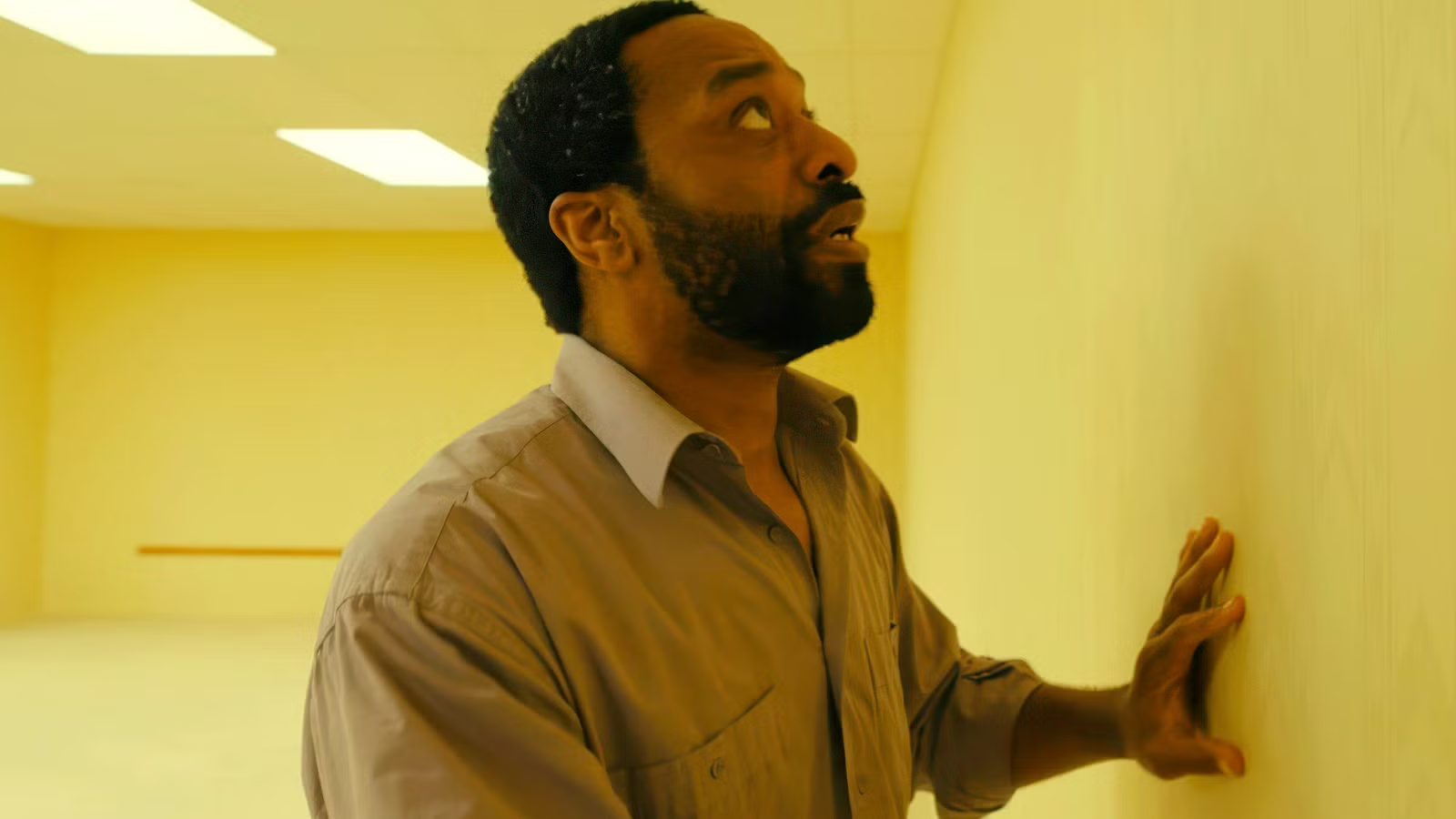
Another good and in some ways significant film—twelve out of twelve new films in a row, for those counting—has crossed our paths, being yet another trampler of a once undefeatable franchise.
The origins of Backrooms go back to a 2019—ancient history!—creepypasta about an eerie interdimensional space that looks like a very ordinary but empty office building or, in fact, a furniture store. Although much of the concept (which I don't know, honestly) was developed collectively on the Internet, 16-year-old writer/director Kane Parsons created, wrote, directed and starred in a YouTube series based on his take on the story and, now, at the ripe old age of 20, has directed a movie that's easily smashed the $100M barrier, made 20x its budget back already and trounced the flagging Mandalorian.
Of course, only 20x its budget (so far) makes it a big flop compared to Obsession, which had now made over 220x it's budget, but I doubt anyone's going to complain. And Backrooms may have even better legs, because while it's not a better film, it does have a massive trove of Easter Eggs for fans.
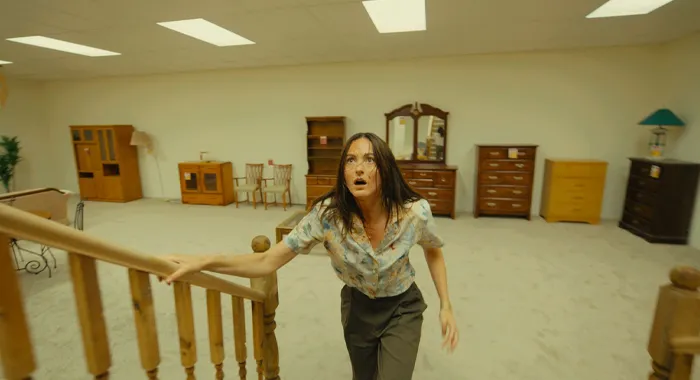
The Boy was quite pleased, more than I, but I liked it and I could sense the layers of lore there.
I would call it a "funhouse horror," which is what I call scary movies that prioritize effects over narrative consistency—but the best funhouse flicks have an aesthetic or dream logic which pulls everything together. Phantasm, for example, doesn't make narrative sense, but it convinces you (in the way of a dream or nightmare) that it's perfectly rational by its own rules.
Its rules, not ours. Why is there a tiny door with three doorknobs there? What is that menacing human-like shadow? Where'd that seagull come from? Despite not making sense, the movie derives a clear set of rules from the first scene and sticks to it. The weird stuff is in the Backrooms, it's all gonna happen there, and while anyone can get in, nothing from inside gets out.
There is even a kind of rationale, which I think shares something in common with the last movie I saw Chiwetel Ejiofor (nope, 20 years later and I still don't know how to pronounce his name): The Life of Chuck. (No spoilers, but TLoC actually makes less sense as it goes and is kind of a cheat.)
Ejiofor does a great job as Clark, the rage-filled loser who owns his own (constantly empty) furniture store, which he sleeps in, and can't decide whether he's a pirate or a sultan (as the store mascot). Lukita Maxwell and Finn Bennet do a good job supporting Ejiofor as he's looking for confirmation of how the Backrooms are laid out. Mark Duplass (Baghead) fits perfectly as the man who knows something about the Backrooms, which is worse than knowing nothing.
The other pivotal character in the story is Mary, Ejiofor's therapist, who's a fraud and mess in her own way. Played by Norwegian actress Renate Reinsve, who is perfect for the part, I kept wondering what I knew her from. (The Worst Person In The World and Sentimental Value.)
The movie starts off with a fair amount of backstory. We learn a lot about Clark from his sessions with Mary. We learn a lot about Mary because she's hung up on some childhood trauma. I thought this part was a little slow, but it all pays off.
We have another movie, in other words, where the makers cared about it. Nobody trying to pad the runtime. Nobody trying to check boxes on some list.
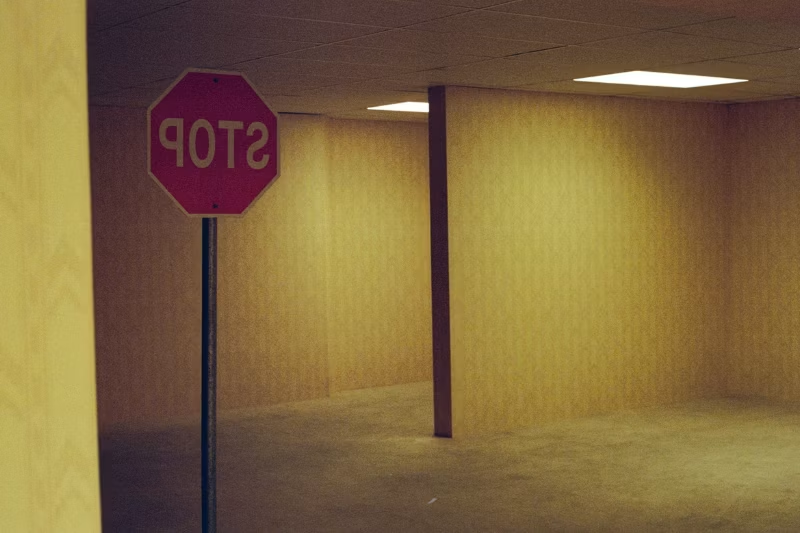
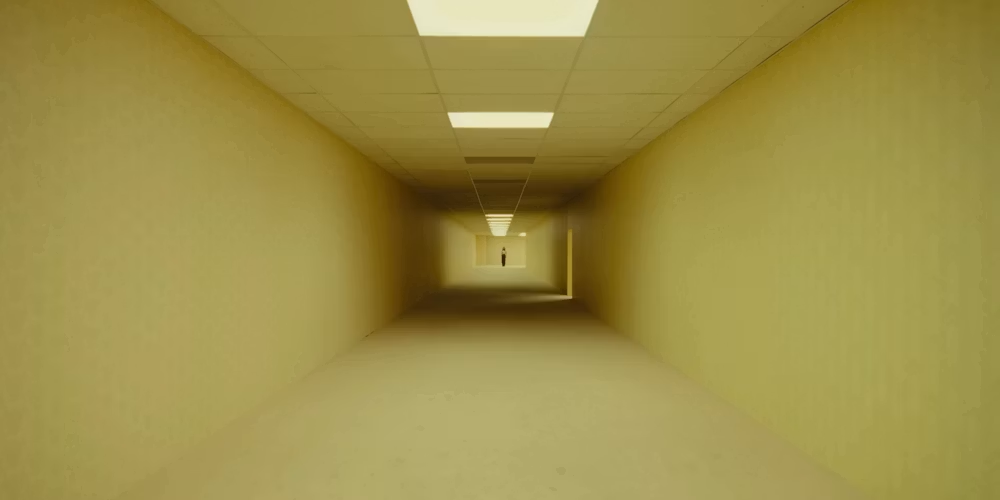
We've thankfully seen more films pulling away from the 2010s "color coding", with recent filmmakers not constraining themselves to blue, gray, black and red. Backrooms is yellow. A not-quite-healthy yellow. And it mostly hews to that kind of a palette without shifting to blue/blacks as a crutch.
Also, the use of "analogue" video, as the kids might or might not be calling it, is very effective. It's basically grainy '90s video—the movie takes place pre-cell phones and old media formats abound. As I noted years ago, both in Cloverfield and Chronicle, using lower res video can actually sell CGI better, at least to my eyes.
Unlike Furiosa, for example, where the action is compromised by a seemingly elastic space, and despite the Backrooms being an irrational, dreamlike space, the topology is very anchored. The backrooms can be and are mapped. This doesn't mean there aren't disruptions in the reality. It means that the disruptions are intentional and not a lazy out. Again, somebody cared about this map.
I don't know that I'd rank it as highly as Obsession or Hokum, but it is very different from both and very layered. One of my tweeps has seen it three times, and it's the sort of thing that sparks fan theories.
It has one jump scare in the opening sequence that I saw coming a mile away and it still got me. There's not a lot of blood. If the movie can go for weird/unsettling over gory, it picks the former every time. I'm sure some will dislike that aspect but on the other hand it makes it easier to recommend to even the squeamish.
Big props to Parsons here. Not just for directing it, but for working with Will Soodik, a more seasoned screenwriter, to adapt his series. And for getting excellent actors rather than insisting on being the lead. (Might've been trouble for the 20-year-old to be a divorced, middle-aged man with a furniture store.)
We are getting spoiled here, and I almost shudder to contemplate what might be around the corner.
Comments
No comments yet.