The Third Man

I have seen the Third Man at least four times, and I have a different reaction to it every time. The review of the last time I saw it is here, and I stand by it: The Third Man (1949).
Sorta. I mean, I do. But this is why movie reviews are BS. You know who decides whether or not you're going to like a movie? You do. There is no other arbiter. Sometimes you make the choice consciously. ("They killed the dog. I hate this movie.") Sometimes you make it unconsciously. ("I just ran over a dog on the way to the theater. I hate this movie," only without the verbalizations.)

But it's up to you, and why I find the whole ratings concepts absurd, and in a lot of aspects, movie reviewing and criticism utter nonsense. (I should break the 2,000 review mark in under a year, in fact.)
I bring it up in this case because I chose (and convinced the boy to choose) seeing this over Let's Make Love, a generally poorly regarded late Marilyn Monroe film chosen by the Laemmle to celebrate her centennial. I salute the Laemmle for making the choice, mind you—her popular films are perpetually on high rotation.
But I've really gotten into the Wednesday-With-Welles series that Stanley Sheff is hosting, and I had a different experience watching The Third Man than I ever have before.
The zither music bugged me hardly at all—and The Boy said the same thing—but that's not the point. It's that it's not a Welles movie.
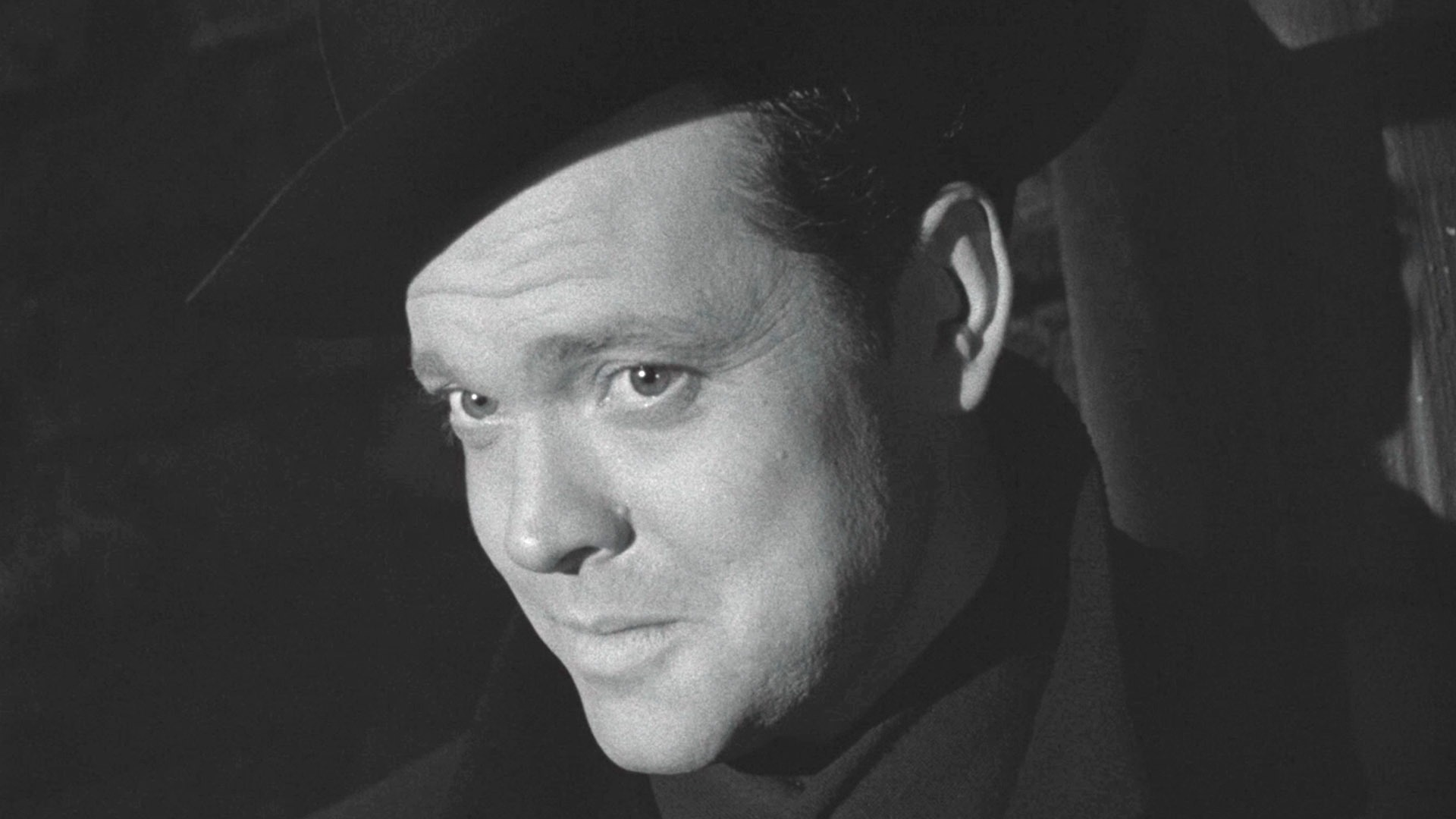
I mean, cineastes all know this. (Cineaste is Latin for "someone who's a jerk about movies".) If you're a normie, you say "Oh, yeah, Third Man, great Orson Welles movie." But it's not. He didn't direct it. He's in it for, maybe, 20 minutes. He's responsible for precisely one scene—the Ferris wheel was his idea.
But the thing that distracted me was that it wasn't even a Welles' kind of movie, which I've gotten a real sense of over the past year. I tried this out on The Boy and got some pushback, but also some buy-in:
Some movies are plot-driven. Some movies are character-driven. Let's take Die Hard as an example of being plot-driven. The characters move from event-to-event, and you could very often swap them out with different characters as long as they did what the plot required. If you change the actions, if you change the plot, you can break the movie.
In a character-driven movie, what matters is that the characters are who they are. You can change a lot of the events and actions and still have the same movie. Citizen Kane doesn't rest on, e.g., the Spanish-American War or...well, I'm sure other things happened in that movie, I'm just blanking on them.
You know, in Die Hard, John McClane gets trapped in a building with putative terrorists, but he doesn't have his shoes on because of a guy on a plane, and he discovers explosives and detonators and develops a rivalry with the bad guys, and ultimately he gets back with his wife (until the sequels) because he's Super Action Man!
In Citizen Kane, Kane becomes super-wealthy, detached from his stultifying home life, engages in yellow journalism, marries a woman and has a child he becomes estranged with who die off-screen, and marries a second woman and builds a big house, and dies lonely because he's become a big ol' jerk. You could change every part of the movie, except in how Kane responds to life, and still have the same movie.
David Lean makes similar movies, I think. Lawrence and Zhivago, and the people they interact with are the important things. Even the Russian Revolution is mere backdrop to Zhivago. Indeed, that may be the whole, subversive (reactionary?) point: That the events don't amount to a hill of beans compared to Yuri and Lara's love. (And they are symbols for Russia and Russians.)
Speaking of hills of beans, Casablanca may be a rare case where everything has to happen exactly as it does, to exactly who it happens to.
Anyway, the point of this ramble is that The Third Man is very much plot-driven. Not only does everything hinge on the mystery rather than the characters, the characters aren't even the characters! That is, the movie tells you things, but you don't see much to convince you. Particularly Welles' Harry Lime.

Cotton's Holly, who is a relentlessly good guy, is successful enough to be famous in Austria, but also broke enough to go work in Vienna after the war, which he does because Lime is also such a great guy. Anna is faithful, moreso than Harry seems to deserve, able to forgive Harry his sins even as he commits them.
And his sins are atrocious. Lime is a mass-murderer. A disfigurer of children. And Harry seems to think Holly will go along with his sociopathic philosophy for a piece of the action.
This is...well, it's unexplained. If your best friend, your lover—if he's a sociopathic mass-murderer who views other humans as ants, how do you not know that? How do you not care? When the sociopath is dealing with you, does it just by chance never come up that you cross him? He's just never had a reason to throw you under the bus?
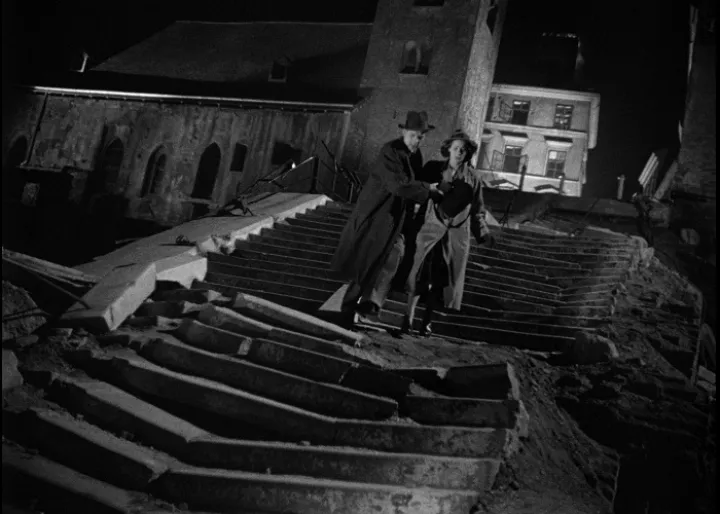
So while I sat there watching the lighting and the crazy angles and the impressive use of shadows, I wasn't all that engaged. It's one of the greatest movies ever made, mind you, and one I've enjoyed in the past. But I wanted something more Welles-ian.
This goes back to my point about reviews being B.S. I'm not going to tell anyone to not go see this movie. It's in the IMDB top 250 for good reason. It probably should be much higher, sandwiched as it is at #231 by The Big Lebowski and The Best Years Of Our Lives, while Forrest Gump sits at #12.
But, hey, that's just my opinion.
Comments
No comments yet.