The Howling (1981)
The year of our Lord, 1981, saw no less than three major werewolf films: The disappointing Wolfen, based on the very good Whitley Streiber book; the John Landis classic, An American Werewolf in London; and the low-budget Avco Embassy feature, The Howling. Based on the book by Gary Brandner, but not really. (I read Brandner's book decades after seeing the movie and thought: "Well, this isn't great.")
Having three werewolf movies of three different budgetary levels is informative, I think: Wolfen, starring a hot-on-a-comeback Albert Finney and Gregory Hines cost $17M and made $10M. American made $30M domestically on a $6M budget. Howling made $17M on about $1.7M budget. The two cheaper movies are so much more fun, it's not even close.
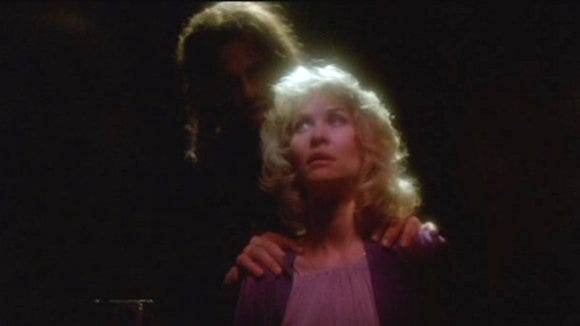
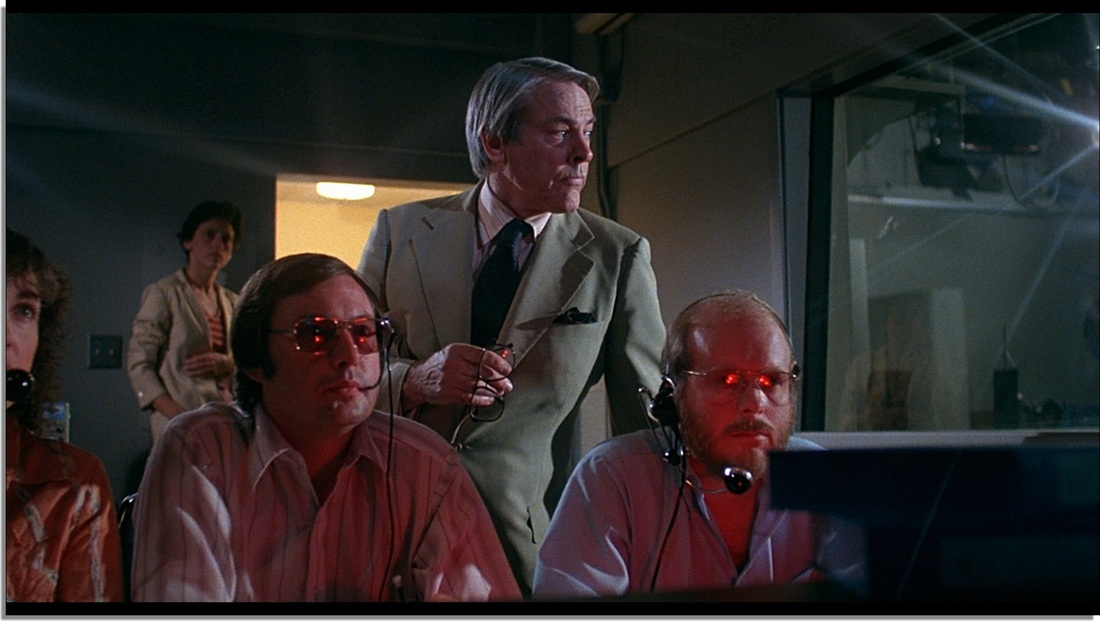
The Howling is the sensitive story of a newscaster Karen (Dee Wallace, E.T., The Hills Have Eyes) who is terrorized by serial killer Eddie Quist (Robert Picardo, "Star Trek: Voyager") in an intense prologue where she's walking the streets to meet him while under the watchful eye of—well, I'm not 100% sure. Her boss (Kevin McCarthy, Invasion of the Body Snatchers) is ready to cut from a boring talk show to her for footage, though there's actually no cameraman around. Her cameraman/producer (Dennis Dugan, "Richie Brockelman, P.I.", director of many Adam Sandler movies) is back at the station listening, until her wire is taken out by the "neon", according to the wire expert.
Meanwhile, Dr. Waggner (Patrick MacNee, The Avengers, A View To A Kill) is on the talk show they're preparing to cut away from, droning on about "embracing the inner animal".
This is a great opening. It's suspenseful, as Karen finds a pay phone with a "Have A Nice Day" sticker on it—well before The Watchmen—and waits for Eddie to call. He does and she moves from the phone booth to a sex shop nearby.
This is on Western Ave, theoretically, but they did this thing in movies where they just took every adult shop from Koreatown to Santa Monica and edited them all together to make it look like Los Angeles was just one big, uninterrupted series of sleazy entertainment venues. When I lived there, there was one adult store on that street—used in every decadence montage—with some kind of smaller, venue across from it. Even Hollywood Blvd. was never that densely packed.
In the booth in the back of the store, Eddie has her watch violent pornography while explaining how she's different from all the shallow people in Los Angeles. And if the happy-face stickers weren't enough to tip you off, this little speech should. It's the exact sort of piquant mixture of Phoebe Cates telling Zach Galligan why they don't celebrate Christmas in Gremlins.
It ends with a twitchy rookie firing bullets into Eddie, and the traumatized Karen gets sent away to Dr. Waggner's The Colony with her husband Bill (real-life future husband Christopher Stone), where they meet the various residents who don't seem to have any particular issues beyond being slightly annoying. Well, John Carradine (The Grapes of Wrath, The Man Who Shot Liberty Valance) is old and possibly suicidal.
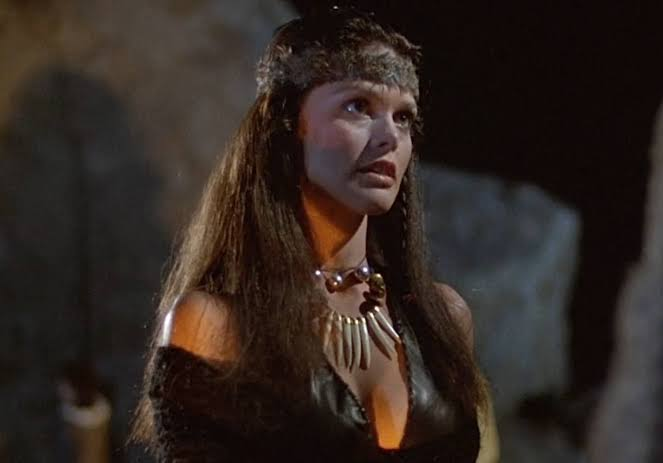
Karen thinks something's off in The Colony, but Bill's getting seduced by the local witch, played by the gorgeous Elizabeth Brooks. Her acting was better than I remembered it, too. She has to do most of it with looks and gestures, and a sex scene which was unlike any other I've seen before or since.
Anyway, Karen starts to suspect some of The Colony residents, and calls up her producer, who sends his girlfriend (Belinda Balaski, Gremlins, Explorers), and this ultimately leads to the Big Reveal.
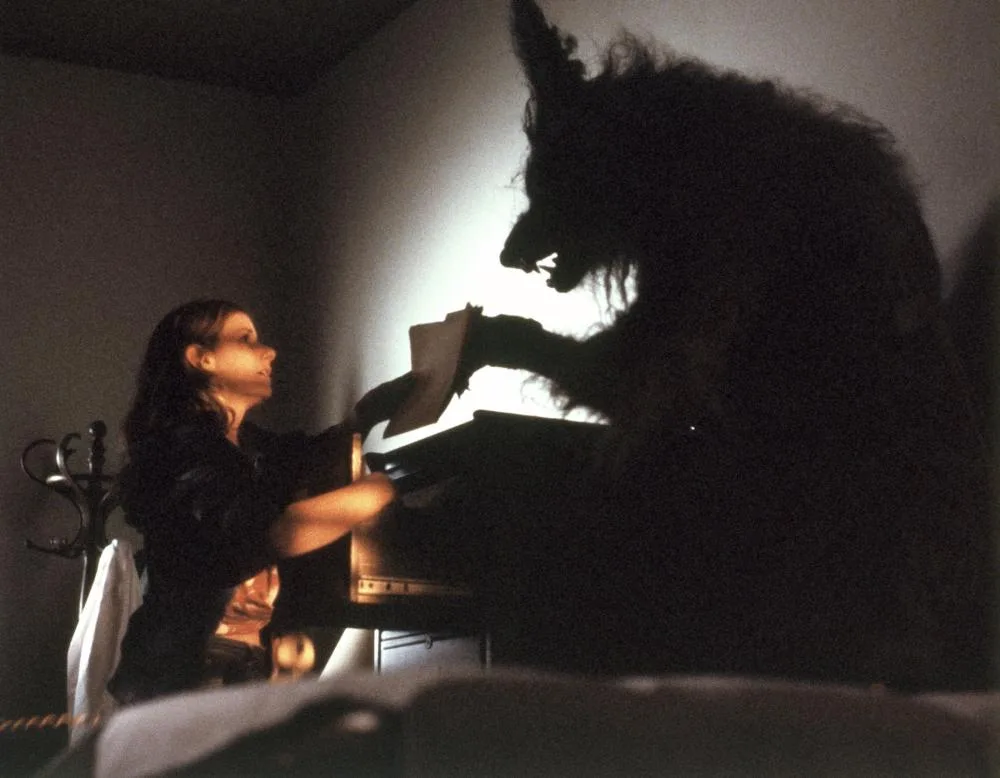
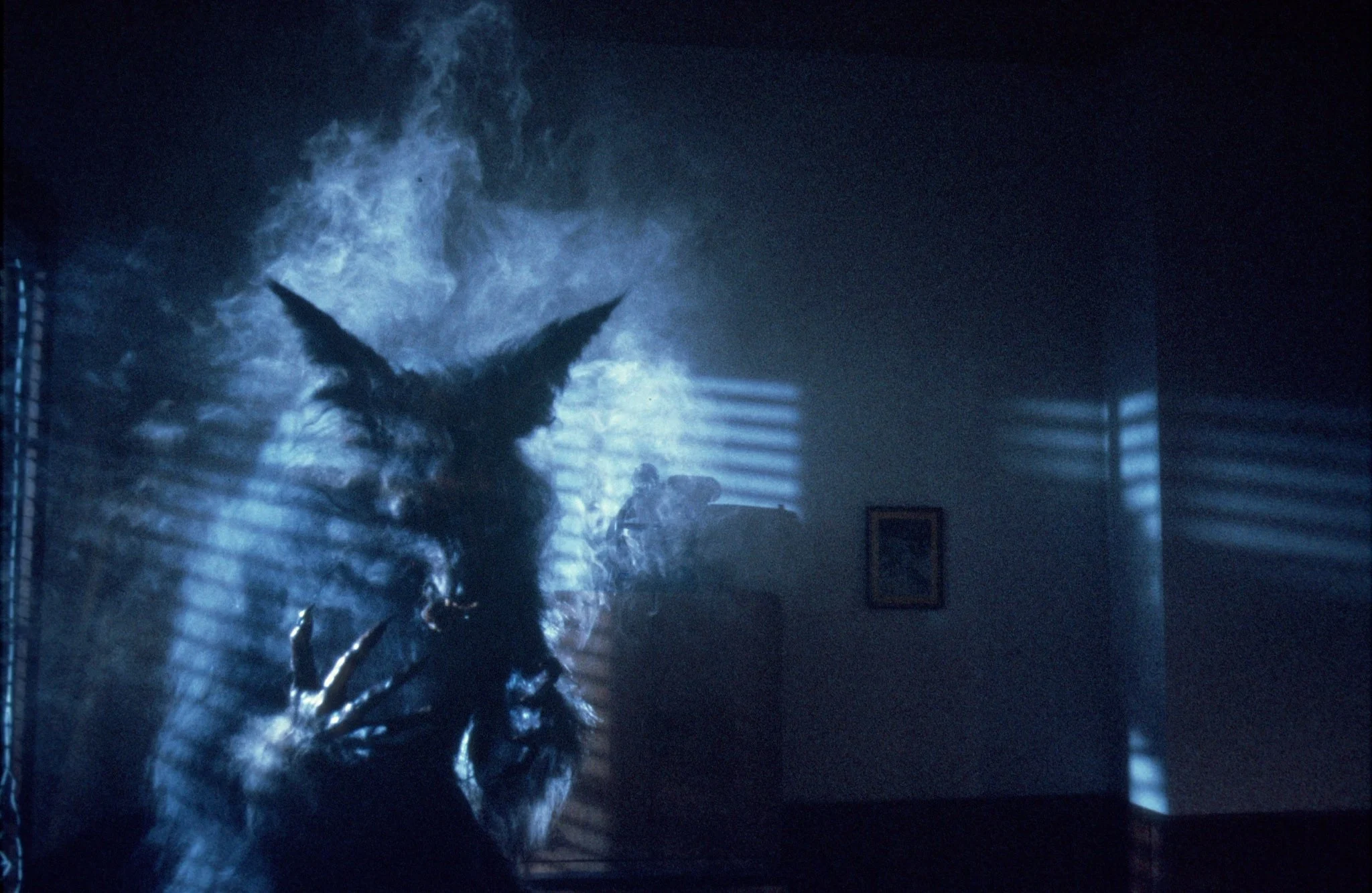
The pacing on this movie is terrific. Dante talked about the editing, which is mostly quite good. When we finally get a werewolf transformation, it's (like American Werewolf) unlike anything we've seen in cinema. No dissolves on a static photo, oh, no: Pulsing skin and stretching bones, the works, within the limitations of the budget, which were severe.
Amusingly, I found the transition both less and more impressive than I did 45 years ago. I was swept up at the time, and astounded. The whole thing takes about three minutes and feels a little long now, and the mechanics a little more obvious. But it's still very effective. And it's "real"! Not a computer in sight!
Rick Baker left the production to work on American Werewolf, but he left behind his assistant, 21-year-old Rob Bottin, who of course would immortalize himself the next year doing the effects on The Thing.
Sometimes I marvel at the quality wandering around back then.
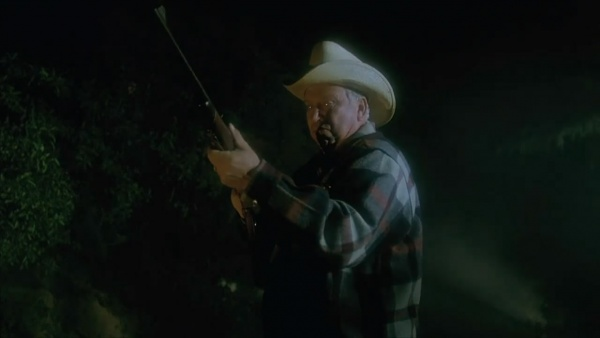
Pino Donaggio did the score, which—well, in places, it's outstanding. In others, it's more like a guy banging on his DX-7. This may well have been budgetary. The real place the low-budget shows, I think, is that the music doesn't really transition well between scenes. You have a musical bit over the action, then it'll just stop for a few beats until the next shot starts. Sometimes it'll go to the end of the shot and switch, sort of jarringly, to the next theme, which might be a different style entirely.
I might have been the only one who noticed, of course.
Full of what we now call Easter Eggs, of several varieties. The characters watch TV, but what is on? Well, The Wolf Man. An old cartoon about the Three Little Pigs. Or they read, but what do they read? Well, Howl, of course. Or, after one of the character's has been turned but hasn't transformed, You Can't Go Home Again.
Beyond that, there are just a zillion small roles and cameos: Roger Corman waits outside the phone booth while Karen is talking to Eddie. Forrest Ackerman is in the occult bookshop—run by Dick Miller, credited, of course, with the character name of "Walter Paisely", which was something of a running gag. Future horror director Mick Garris (the TV movies for "The Stand" and "The Shining") has a cameo and was in attendance at this showing. Johnathan Kaplan (probably best known for producing and directing "E.R."), art director Bob Burns (who also did the art direction for the original Texas Chainsaw Massacre and Re-Animator), and future 2-times Oscar nominee Michael Chapman (for his cinematograpy on Raging Bull and The Fugitive).
Screenwriter John Sayles has a small role as a morgue attendant who places his lunch sloppy joe in-between the internal organs of his newest guest. And he has a massive role in turning a so-so horror into a biting commentary on both society and werewolves. (It's about time someone took them down!)
Early small role for Meschach Taylor. Slim Pickens in a relatively late role as the sheriff. Old John Carradine would only rack up another 30+ credits before he passed way in the late '80s. (And at least one credit in the mid-'90s!)
It's very 1981—adult stores and early serial killer vibes, though not much gore and little nudity—which I understand "modern audiences" might find problematic, but The Boy enjoyed it. Definitely a gem.
Comments
No comments yet.