Ninja Scroll (1993)
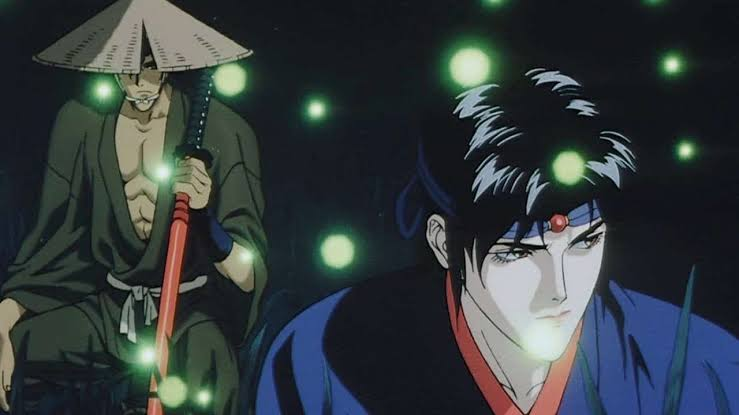
In the mid-'90s, America got a bunch of adult Japanimations. This may have been because of the relative success of Akira, or because "The Simpsons" was demonstrating a love of both animation and of not-necessarily-for-kids animation that many were eager to capitalize on. For those of us who had grown up on hash like "Speed Racer", it was an eye-opener.
The movie starts with a few vivisections and then moves seamlessly into sexual assault.
If it were just this kind of exploitation, it would—well, it would still probably be pretty cool, but there's a rich, dense story told here in an economic 90 minutes.1
When the story starts, we see Jubei, a Ronin, confronted by some thieves over a retrieved sword. We discover he didn't take much money for the job, because it was a poor job. Then a storm comes and a bunch of riders crosses the land leaving a plague in their wake. The local ninja squad rides out to investigate, only to be slaughtered by demons.
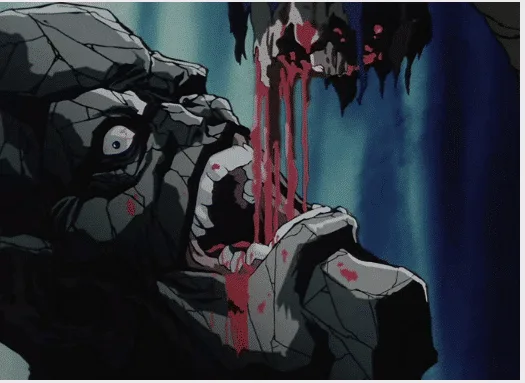
The only survivor is Kagero, the only female ninja—a kunoichi, to use the word popularized by Futaro Yamada in the novels that inspired this—whose primary job is a poison taster. The side-effect of this trade, apparently, is that anyone who has sexual contact with her is going to die. Jubei stumbles upon her—and the demon who is about to rape her, dead or alive—and saves her life.
That's their meet-cute.
You could argue that he also saves the demon's life, too, but I don't want to get into spoilers.
One of the most oddly effective aspects of this movie is that it's in media res to the nth degree. Jubei's just off one mission. He stumbles into the whole demon/plague thing saving Kagero's life. Behind the plot is a fairly standard "gonna take power from the current shogun and start a civil war to be the new shogun" with a bonus of "also, I have demons helping me." But Jubei is connected to the head demon due to a betrayal that occurred years ago involving a gold mine.
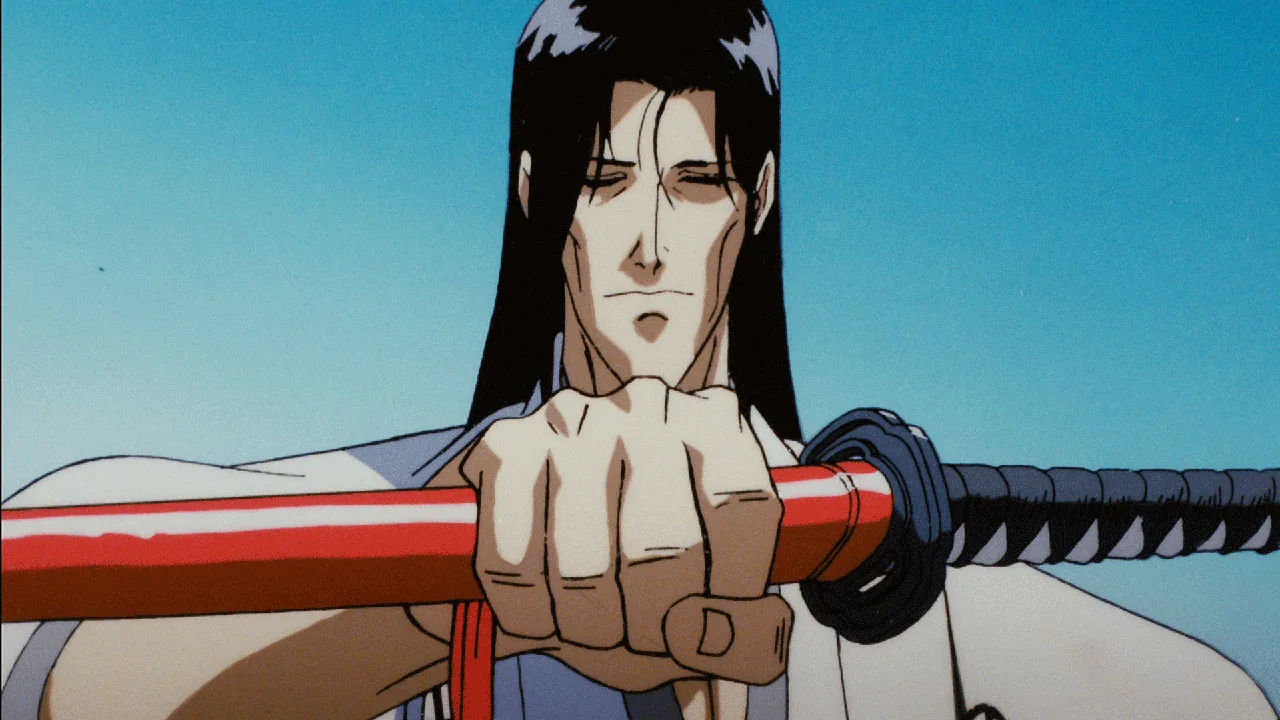
And you take all this an amp everything up to 11. A demon with rock-skin whose weapon is a sword with a blade at both ends which cuts through trees and people like a helicopter blade. A lady who has snake tattoos that are snakes and also she's a snake. A hunchback whose hunch is actually a wasp's nest. (And so on in this fashion until you have seven demons.)
These demons are catty "af" (as the kids say), too. They're all sleepin' around and obviously doin' their own thing. Demons—not as great for an army as they advertise.
Anyway, Jubei gets blackmailed into getting involved in the whole affair, and he and Kagero spend the next hour quarrelling and saving each others' lives and killing demons. Of course, it all ends in betrayal, death and a grand showdown, and feels like nothing so much as an episode of the world's awesome-est show.
There was a brief attempt at a show in the early 2000s which did not live up to the potential. Thirty-plus years later, a sequel is planned.
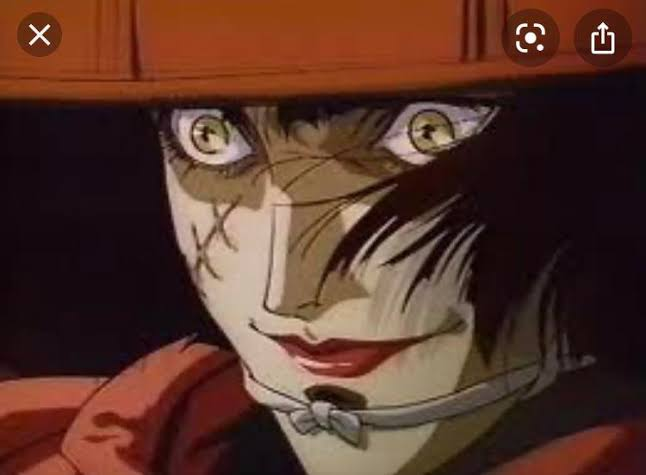
It looks great, too—better than ever in 4K. The animation is limited but it's used so well, you barely notice. The color palettes switch very effectively, the usual shortcuts are in play for rain, motion, etc., but it's not as rote as a lot of things today. The character styles are very much of their time. Kagero looks kind of like a Nagel, which is not my favorite, but it all hangs together so well, this is a mere quibble.
The music is also spare but effective, a cross between traditional koto-twanging and electronic synth.
Writer-director Yoshiaki Kawajiri is behind a number of these movies that changed my ideas about Japanimation, to where I'd even call it animé: Wicked City, Demon City Shinjiku, and Vampire Hunter D: Bloodlust (a 2003 sequel to a 1985 animé which is also getting a sequel). But I think this is his best.
Notes
- OK, it really wouldn't be very cool, in my experience: stuff that's exclusively exploitative tends to be boring.back
Comments
No comments yet.