Laemmle's List

Did you know that—wait, before I even start this, I have to step back into history a little. Did you know Carl Laemmle founded Universal Studios (and Universal City, for that matter? His son, Carl Laemmle Jr., was the guy who brought Universal into the modern era and said, "Hey, let's make horror movies!" Thus began the classic horror films of the '30s (Frankenstein, Dracula, et al.). The Laemmles lost control of the studio in the late '30s (a story in itself) and Carl Senior died in 1939.
But before he died, he got a whiff of the bad things happening in Europe, and personally sponsored dozens of Jews for American visas. Back then, of course, you couldn't just waltz into America and collect benefits. For one thing, there weren't a lot of benefits. For another, immigrants had to not be a burden on their host state. Crazy, no?
Laemmle's sponsorship came down to paying fees and making written commitments to the American government that he would be financially responsible for these people if they were in danger of becoming wards of the state. Finally the State Department tells him, "Look, we know you're a millionaire, but you can't sponsor everyone." So Laemmle got other people to act as straw sponsors in order to save more people.
This presents a number of tantalizing questions: Who were the straw sponsors? Who weren't the straw sponsors—as in who refused? After all, there was a strong Jewish community in Southern California at the time, and it would be interesting to know who demurred and why. (The movie people in particular were very concerned about being true-blue Americans, which is why the Golden Age of Hollywood happened, in my opinion.) How did he get involved with the SS St. Louis and what steps did he take to try to get those poor souls into America after they were turned away from Havana in May, 1939, just months before his death?
The documentary Laemmle's List answers none of these questions.
Instead, it asks the question: How do these things affect Deborah Blum, the great-grandniece (or maybe great-great grandniece) of Carl Laemmle, and the granddaughter of one of the founders of the Laemmle theater chain (where this was shown on three separate nights)?
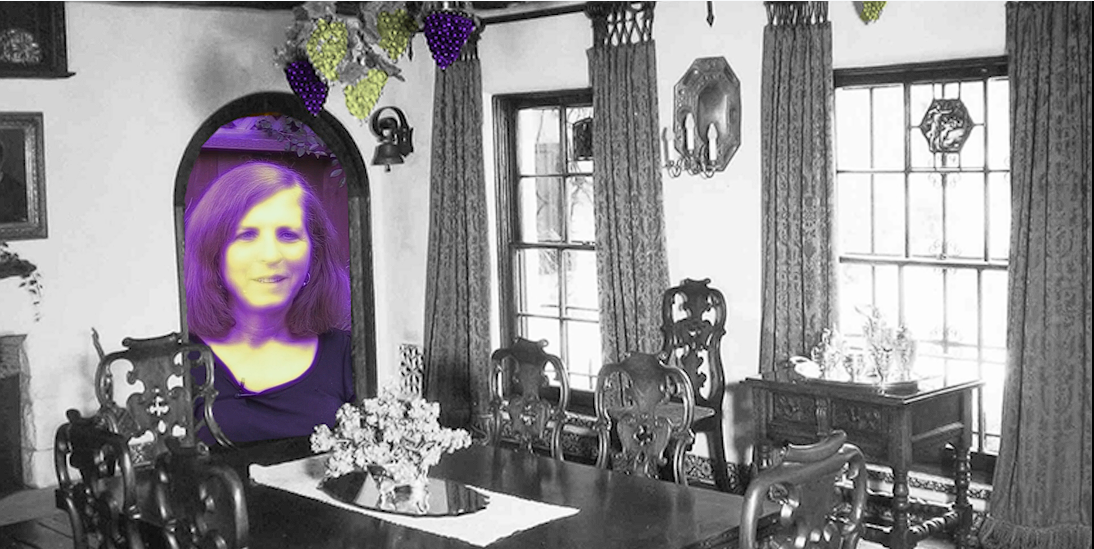
And the answer, padded out by some Neil Breen-level digital effects, is that it made her aware of things that she was not aware of at the time. We join her on her surface-level study as she travels Southern California and Germany—on a totally not tax-deductible family vacation—and says things like "Egg Street. Maybe there were a lot of chickens there." We also get this gem from a German in Stuttgart: "Most Germans are against Nazis now."
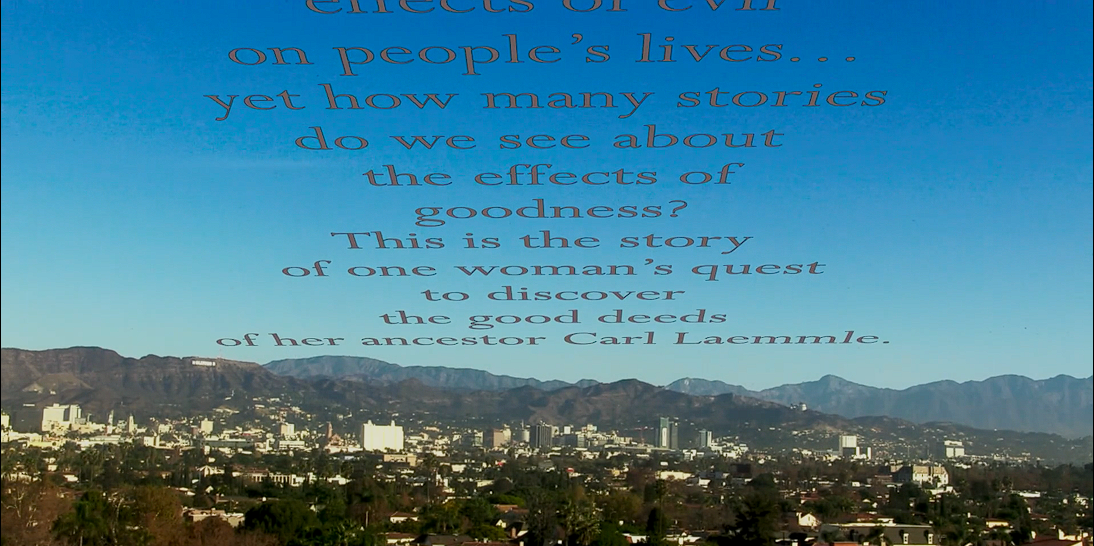
I don't want to be mean, but I also don't want to give the impression that this is going to be an informative documentary about Carl Laemmle. Beyond some unintentional laughs, and a quaint amateurishness that is not without is charms, the movie also goes too long. It has no thesis, no depth, no scope, no point, really, except to say "Here I am entering my senior years and just discovering that my entire privileged life was formed against a backdrop of one of the great horrors of the 20th century."
I don't mean that as an insult, particularly. I, too, have a privileged life. My grandparents experienced the dust bowl and fought in WWII, and none of them particularly talked about it. Of course, I'm not making a movie about discovering this. (Maybe I should, though!)
We've seen the antithesis of this, too, with things like Hitler's Children—really more about grandchildren and great-grandchildren of people who were alive during WWII, with varying degrees of involvement in actual atrocities.
It begins to feel like a kind of stolen valor. Especially as it stretched past the 90 minute mark and your brain had all this time to process certain bizarre aesthetic choices, like Carl's face on a zeppelin that's going around the globe which is just...Germany. (That one sort of hurt my brain, really. Planet Earth = Germany in the 1930s.)
On the moviegique three-point documentary test:
- The subject matter. Well, here's the rub. Carl Laemmle is terrific subject matter and there is, in fact, a well-regarded documentary called Carl Laemmle from 2019. Perhaps this scuttled the Blum's plans to develop this further. But the actual subject matter—how a descendent of a historic figure feels about that person—is much more personal, and more limited in scope and interest.
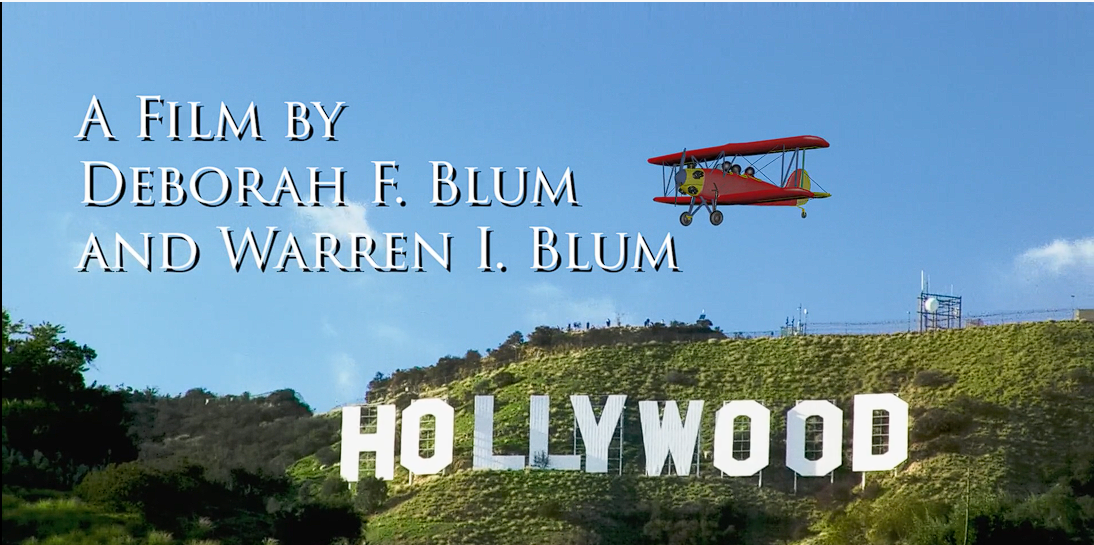
- The presentation. Windows MovieMaker kept coming to mind. At the end when we're getting the summary, the filmmakers chose to turn the sky red. The Boy and I didn't quite get that. Was it supposed to be ominous or significant or...we never did figure it out. The score had its moments.
- The slant. Here's another hitch. Normally, when we talk about slant we're referring to the bias the person brings to the facts in order to create a narrative. It's not always bad. It's expected, even, when the subject is a person. The problem with the slant here is that it's toward the filmmakers rather than the putative subject. (See point one.)
Hard to recommend, really, unless you're really interested in the filmmakers.
Comments
No comments yet.